Pre-Winter Septic Troubleshooting: Early Signs You Need Septic System Repair
What happens to shallow septic lines during a hard freeze? Apply these home maintenance tips and troubleshooting to protect your property before winter hits.
Broken drain pipe repair is a critical home maintenance issue that demands immediate attention. Whether you're dealing with slow drains, foul sewage odors backing up into your home, or mysterious wet spots in your yard, a damaged drain pipe can quickly escalate from a minor inconvenience to a major disaster. Homeowners in Lake County, IL face these plumbing emergencies year-round, and understanding your options is the first step toward protecting your property and your peace of mind.
Quick Answer for Broken Drain Pipe Repair:
For comprehensive diagnostics and expert guidance, learn more about our sewer and drain services, or schedule an emergency repair consultation today.
A broken drain pipe isn't just about inconvenience—it's about protecting your home's foundation, preventing sewage contamination, and avoiding thousands in water damage. This guide walks you through recognizing the warning signs, understanding your repair options (from DIY fixes to professional trenchless solutions), and knowing when to call in the experts.
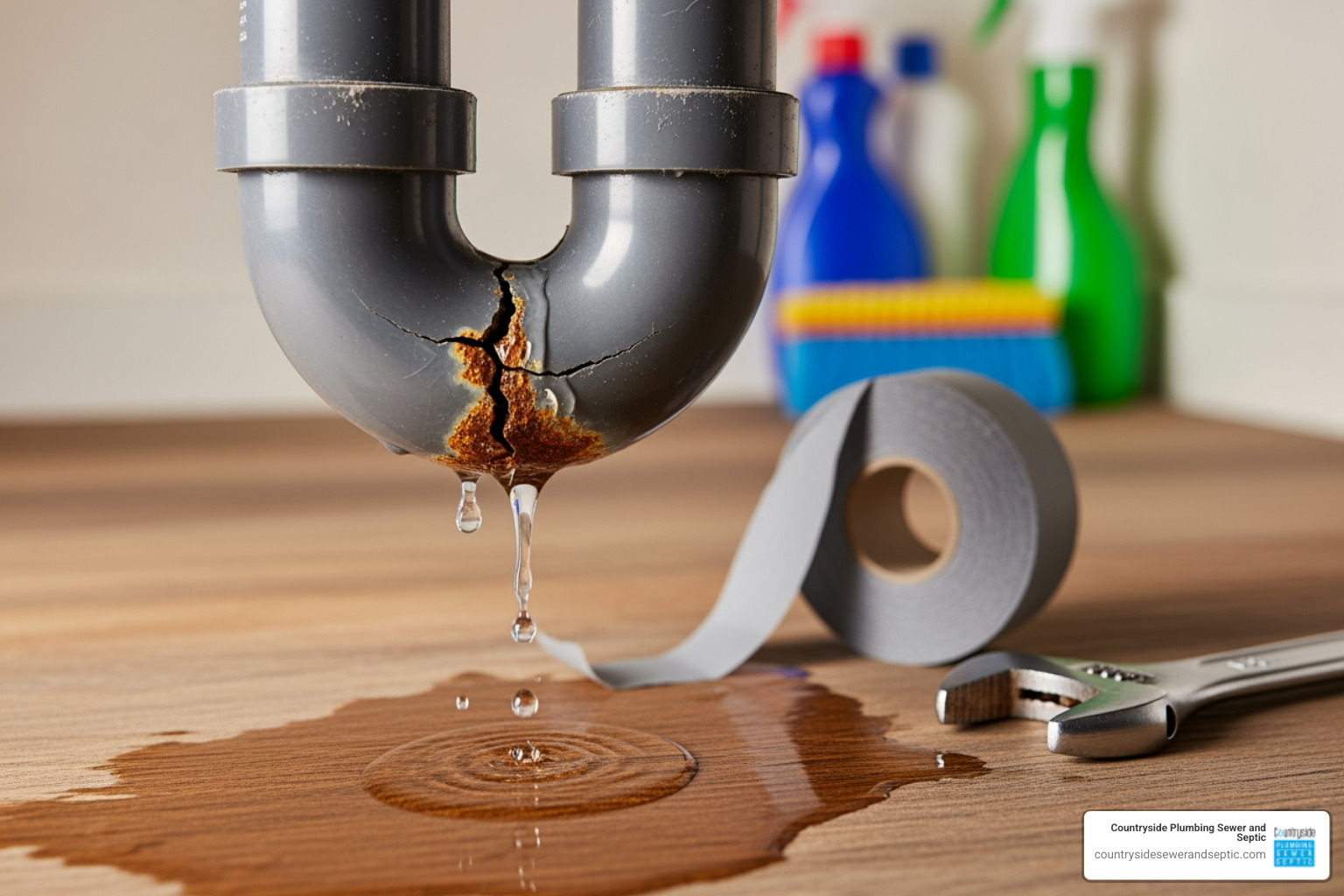
A healthy plumbing system operates silently, out of sight and out of mind. When something goes wrong, however, your home often sends out distress signals. Recognizing these common signs of a broken drain pipe early can save you from a much larger headache down the road.
One of the most frequent complaints we hear from homeowners in Lake County, IL, is about persistent clogs and slow drains. If you find yourself frequently reaching for the plunger, or if multiple fixtures in your home are draining sluggishly, it's a strong indicator that something is amiss deeper within your drainage system. This isn't just about a simple blockage; it could point to a damaged or collapsed pipe section.
Beyond just slow drainage, a particularly unpleasant sign is the presence of foul sewage odors. These smells can emanate from drains, or even from areas around your property, suggesting that sewer gases are escaping through a crack or break in the pipe. This isn't just an annoyance; sewer gas can be a health hazard. If you're experiencing a persistent, unpleasant smell, it's time to investigate.
Outdoors, your lawn can also tell a story. Unusually wet or soggy patches in your yard, or areas where the grass appears much greener and lusher than the surrounding landscape, can be a telltale sign of an underground leak. The excess water acts as a natural fertilizer, making those spots stand out. However, what's feeding your lawn could be raw sewage, which carries contaminants. We often see these signs in our local communities, indicating a need for urgent attention.
More severe issues might manifest as visible water damage, such as water stains on walls or ceilings, especially in basements or lower levels. In some cases, a broken drain pipe can even lead to foundation cracks as leaking water erodes the soil supporting your home's structure. And, if you've noticed an increase in pests like rats around your property, particularly if you find "rat holes" – smooth-looking holes that reappear even after being filled – it could be due to a compromised sewer line providing them with access and a food source. For a deeper dive into these indicators, check out our insights on 5 Telltale Signs Your Sewer Line Is Broken. If you're seeing signs of a Backed Up Sewer, it's definitely time to get professional help.
Understanding why drain pipes break is key to both diagnosing existing problems and preventing future ones. Several factors contribute to pipe damage, some of which are particularly prevalent in our region of Lake County, IL.
Perhaps the most notorious culprit is tree root intrusion. Trees are always on the hunt for water and nutrients, and the small cracks or loose joints in your underground drain pipes are irresistible. Once inside, these roots can grow, causing blockages and exerting immense pressure that can crack or even completely shatter pipes. This is especially common in older homes with clay or cast iron pipes.
Shifting soil and ground movement are also major contributors. Seasonal changes, freeze-thaw cycles, and even minor earthquakes can cause the ground around your pipes to shift, leading to misalignment, cracks, or complete pipe collapse. Heavy machinery or construction activities nearby can also inadvertently damage underground lines.
The age and material of your pipes play a significant role. Many older homes in Lake County, IL, feature original sewer lines made from materials like clay or cast iron, some of which are 80-100 years old. Over time, these materials can corrode, deteriorate, and become brittle, making them highly susceptible to cracking, shifting, and collapse. Newer pipes, often made of PVC or ABS, offer better longevity and corrosion resistance, but they aren't immune to damage.
Extreme temperature changes, particularly the freezing temperatures we experience in winter, can cause pipes to freeze and burst if not properly insulated. This rapid expansion of water is incredibly powerful and can lead to significant breaks.
Finally, clogs and blockages aren't just a symptom; they can also be a cause of pipe failure. Persistent blockages from grease, hair, food debris, or non-flushable items can create pressure buildup within the pipe. This pressure, especially in already weakened or older pipes, can lead to cracks or ruptures. We've seen how a seemingly harmless item flushed down the toilet can contribute to a major pipe issue over time. For more information on why pipes fail, read our article on The Most Common Causes of Sewer Pipe Failure.
Once a broken drain pipe has been identified, the next crucial step is determining the best repair method. We use state-of-the-art diagnostic tools, such as video camera inspections, to accurately pinpoint the location and extent of the damage. This allows us to get an up-close look at the pipe's interior, identifying cracks, blockages, root intrusion, or areas of collapse without invasive digging. Understanding the pipe's material—whether it's old cast iron, clay, or modern PVC—is also vital, as it influences the repair approach.
The choice between repair methods largely depends on the severity of the damage, the pipe's location (especially if it's under a driveway or landscaping), and your budget. We offer a range of solutions, from traditional excavation to advanced trenchless technologies, to address any drain pipe issue you might face. For a comprehensive overview of our capabilities, explore our Sewer Repairs page.
Here's a quick comparison of the primary repair methods:
| Feature | Traditional Excavation | Trenchless Pipe Lining (CIPP) | Trenchless Pipe Bursting |
|---|---|---|---|
| Disruption | High (extensive digging) | Low (minimal digging) | Low (minimal digging) |
| Time | Longer | Shorter | Shorter |
| Application | Collapsed, severely damaged pipes; full replacement | Cracked, leaking pipes; root intrusion; minor misalignments | Severely damaged, collapsed pipes; full replacement |
| New Pipe Material | Varies (often PVC) | Resin-cured liner | HDPE |
| Effectiveness | Full pipe replacement | Creates new pipe within old | Full pipe replacement |
Traditional excavation, often referred to as "dig and replace," is the most straightforward method for broken drain pipe repair when other options aren't suitable. This approach involves digging a trench to expose the entire damaged section of the pipe. Once exposed, we remove the compromised pipe and replace it with a new, durable pipe section, typically made of PVC.
This method is particularly effective and often necessary for pipes that are completely collapsed, severely misaligned, or have extensive damage that cannot be addressed by trenchless techniques. It allows for full access to the pipe, ensuring a thorough repair and replacement. The main drawback, as you might imagine, is the significant disruption to your yard, landscaping, and potentially driveways or sidewalks. After the repair, the trench is backfilled, and the surface is restored, though landscape restoration can be a substantial part of the overall project. For very old or extensively damaged main lines, traditional excavation might be the most reliable long-term solution.
In recent years, trenchless pipe repair methods have revolutionized how we approach broken drain pipe repair, offering less invasive and often more efficient alternatives to traditional excavation. These "no-dig" or "minimal-dig" technologies are particularly appealing to homeowners in Lake County, IL, who want to preserve their landscaping and minimize disruption.
Pipe Lining (Cured-in-Place Pipe - CIPP): This method involves creating a new pipe within the old one. We begin by accessing the damaged pipe through a small access point. A flexible, resin-coated liner is then inserted into the existing pipe and inflated. The resin cures, forming a hard, seamless new pipe that perfectly conforms to the old pipe's contours. This new liner effectively seals cracks, closes off root intrusion points, and restores the pipe's structural integrity. Pipe lining is excellent for pipes with cracks, leaks, or minor root intrusion, and it significantly improves water flow by creating a smooth interior surface.
Pipe Bursting: When a pipe is too severely damaged for lining—perhaps it's collapsed or has significant structural issues—pipe bursting offers a trenchless replacement solution. This method also requires minimal access points. A new, high-density polyethylene (HDPE) pipe is pulled through the old, damaged pipe. As the new pipe is pulled, a specialized "bursting head" at the front breaks apart the old pipe, simultaneously laying the new one in its place. This effectively replaces the entire damaged section with a brand new, durable pipe, often with a larger diameter for improved flow. HDPE pipes used in this method offer superior longevity and performance compared to older materials.
Both trenchless methods offer significant advantages: they minimize digging, preserve your existing landscaping, and often reduce the overall project timeline. While the upfront cost for trenchless technology might seem higher than a simple patch, when you factor in the avoided costs of landscape repair and restoration, it often proves to be a more cost-effective solution in the long run. We often recommend trenchless options for properties where the drain line runs under concrete slabs, driveways, or mature trees, as it avoids the massive expense and hassle of tearing up these areas.
When faced with a broken drain pipe, many homeowners wonder if they can tackle the repair themselves. While a DIY approach might seem appealing for minor issues, it's crucial to understand the complexities involved and when to call in the experts.
Before attempting any repair, safety is paramount. Always shut off the water supply to the affected area or your entire home to prevent further water damage. We can't stress this enough; failing to do so can turn a small leak into a flood. If you're working with larger pipes or suspect a main line issue, assessing the damage severity accurately is also critical. What looks like a simple crack could be a symptom of a larger systemic problem.
Another important consideration, especially for underground or main sewer line repairs, is permits and inspections. In many parts of Lake County, IL, any significant work on your sewer line requires permits and inspections by local authorities. This ensures the work is done correctly and safely, protecting you and future homeowners. Attempting major repairs without the necessary permits can lead to fines and the requirement to redo the work.
Finally, professional plumbers have access to specialized equipment for diagnostics and repair that homeowners typically don't. This includes video inspection cameras, pipe locators, and the heavy-duty machinery required for trenchless repairs. For any significant plumbing concern, particularly if it involves your main sewer line, our team has the tools and expertise to ensure the job is done right. For all your home's plumbing needs, explore our comprehensive Plumbing services.
For very minor, accessible, and above-ground PVC drain pipes, a homeowner with some basic skills might attempt a temporary or simple repair. This usually applies to small leaks or cracks in visible drain lines, not pressurized water supply lines or underground sewer pipes.
Here’s a basic approach for a simple coupling fix on a PVC drain pipe:
Tools and Materials You'll Need:
Step-by-Step for a Simple Coupling Fix:
It's vital to emphasize the limitations of this DIY approach. This method is generally not suitable for pressurized water lines, hot water lines, pipes made of materials other than PVC (like copper or cast iron), or any underground or main sewer lines. These types of repairs require specialized tools, materials, and expertise to ensure long-term reliability and safety. If you're unsure, it's always best to err on the side of caution.
While minor, visible drain pipe repairs might be a tempting DIY project, most broken drain pipe repair scenarios, especially those involving your home's main drainage system, absolutely require professional expertise. For homeowners across Lake County, IL, knowing when to call us can prevent costly mistakes and ensure a lasting solution.
You should always call a professional plumber if the problem involves underground pipes. Whether it's your main sewer line running under your yard or a drain pipe beneath your concrete slab, these repairs are complex. They require specialized equipment like pipe locators to find the exact break and often heavy machinery for excavation or trenchless technologies. Attempting to dig yourself can be dangerous, risking damage to other utility lines.
If you're experiencing a Backed Up Sewer Line or if multiple fixtures in your home (sinks, toilets, showers) are affected simultaneously, it's a strong indication of a main line issue. This is beyond a simple clog and points to a significant break or blockage in your primary drainage system. Such problems can quickly lead to raw sewage backing up into your home, creating unsanitary conditions and extensive water damage. In these emergency situations, our Emergency Backed Up Sewer Service is available to address the issue promptly.
Recurring problems also signal the need for a professional. If you're constantly dealing with clogs in the same drain or persistent foul odors, it means temporary fixes aren't addressing the root cause. A professional can conduct a thorough inspection, often with a video camera, to diagnose the underlying issue—whether it's root intrusion, a sagging pipe, or corrosion—and recommend a permanent solution.
Furthermore, any time trenchless solutions like pipe lining or pipe bursting are considered, professional intervention is mandatory. These methods require specialized training, equipment, and materials that are simply not available to the average homeowner. Our dual-licensed technicians have the expertise to execute these advanced repairs, ensuring the integrity and longevity of your drainage system.
Finally, if the damaged pipe is made of older, more complex materials like ceramic or cast iron, or if the repair involves a section that runs under a cement slab, professional help is essential. These materials require specific handling and repair techniques, and working under a slab adds another layer of complexity that only experienced professionals can manage safely and effectively.
After dealing with a broken drain pipe repair, the last thing any homeowner wants is a repeat performance. Fortunately, many pipe problems are preventable with proper care and attention. We believe that proactive maintenance is the best defense against unexpected plumbing emergencies in Lake County, IL.
One of the most effective preventative measures is regular maintenance, including routine drain cleaning. Over time, grease, hair, soap scum, and other debris can accumulate in your pipes, forming blockages that restrict flow and put stress on the system. Periodic professional Drain Cleaning can clear these buildups before they become major problems. We recommend annual or bi-annual cleanings, especially for high-use drains like kitchen sinks.
Proper disposal habits are crucial. The golden rule is simple: only flush human waste and toilet paper. "Flushable" wipes, paper towels, feminine hygiene products, and even excessive amounts of food scraps should always go in the trash, not down the toilet or sink. These items do not break down like toilet paper and are notorious for causing stubborn clogs and putting undue strain on your entire drainage system, including your septic tank if you have one.
Avoiding harsh chemical drain cleaners is also important. While they might offer a temporary fix for a clog, these chemicals are corrosive and can actually damage your pipes from the inside, especially older ones. They can eat away at pipe materials, leading to weakened sections and eventual breaks. Instead, opt for enzymatic cleaners or, better yet, call a professional for persistent clogs.
Mindful landscaping can protect your underground pipes from destructive tree roots. Before planting new trees or shrubs, be aware of the location of your sewer and drain lines. Opt for root-friendly plants or create a sufficient buffer zone between aggressive root systems and your pipes. If you already have large trees near your lines, consider installing root barriers to prevent intrusion.
Finally, annual inspections of your plumbing and drainage system can catch potential issues before they escalate. A professional inspection can identify early signs of corrosion, minor cracks, or root intrusion, allowing for preventative repairs rather than emergency fixes. For homes in Lake County, IL, maintaining a home temperature above 14 degrees Fahrenheit during winter is also vital to prevent pipes from freezing and bursting, especially in unheated areas like crawl spaces or garages. By adopting these best practices, you can significantly extend the life of your drain pipes and maintain a healthy, functional plumbing system.
Navigating the complexities of a broken drain pipe repair can be daunting for any homeowner. From the moment you notice those telltale signs—the persistent clogs, the unsettling gurgles, the foul odors, or the suspiciously lush patches in your yard—it's clear that your home's hidden infrastructure needs attention. Throughout this guide, we've walked through the common culprits behind pipe failure, from invasive tree roots and shifting soils to aging materials and stubborn blockages.
We've also explored the diverse array of solutions available, contrasting the traditional, yet often necessary, excavation method with the innovative, less disruptive trenchless technologies like pipe lining and pipe bursting. Each approach has its merits, and the best choice always depends on the unique circumstances of your home and the nature of the damage.
The decision between a DIY fix and calling a professional is a critical one. While minor, accessible repairs might be within the scope of a handy homeowner, the vast majority of drain pipe issues, especially those underground or affecting your main sewer line, demand the expertise, specialized equipment, and permitting knowledge that only a licensed professional can provide. Ignoring the warning signs or attempting complex repairs without proper know-how can lead to more extensive damage, increased costs, and potential health hazards.
Securing your home's plumbing health is an ongoing commitment. By understanding the signs of trouble, making informed choices about repair methods, and implementing preventative measures like regular maintenance, proper disposal habits, and mindful landscaping, you can significantly reduce the risk of future pipe problems.
For comprehensive diagnostics and lasting solutions in Lake County, IL, trust the dual-licensed experts at Countryside Plumbing Sewer and Septic. We're here to provide the peace of mind that comes with a properly functioning drainage system. Get expert sewer repair services today.
Broken drain pipe repair is a critical home maintenance issue that demands immediate attention. Whether you're dealing with slow drains, foul sewage odors backing up into your home, or mysterious wet spots in your yard, a damaged drain pipe can quickly escalate from a minor inconvenience to a major disaster. Homeowners in Lake County, IL face these plumbing emergencies year-round, and understanding your options is the first step toward protecting your property and your peace of mind.
Quick Answer for Broken Drain Pipe Repair:
For comprehensive diagnostics and expert guidance, learn more about our sewer and drain services, or schedule an emergency repair consultation today.
A broken drain pipe isn't just about inconvenience—it's about protecting your home's foundation, preventing sewage contamination, and avoiding thousands in water damage. This guide walks you through recognizing the warning signs, understanding your repair options (from DIY fixes to professional trenchless solutions), and knowing when to call in the experts.
A healthy plumbing system operates silently, out of sight and out of mind. When something goes wrong, however, your home often sends out distress signals. Recognizing these common signs of a broken drain pipe early can save you from a much larger headache down the road.
One of the most frequent complaints we hear from homeowners in Lake County, IL, is about persistent clogs and slow drains. If you find yourself frequently reaching for the plunger, or if multiple fixtures in your home are draining sluggishly, it's a strong indicator that something is amiss deeper within your drainage system. This isn't just about a simple blockage; it could point to a damaged or collapsed pipe section.
Beyond just slow drainage, a particularly unpleasant sign is the presence of foul sewage odors. These smells can emanate from drains, or even from areas around your property, suggesting that sewer gases are escaping through a crack or break in the pipe. This isn't just an annoyance; sewer gas can be a health hazard. If you're experiencing a persistent, unpleasant smell, it's time to investigate.
Outdoors, your lawn can also tell a story. Unusually wet or soggy patches in your yard, or areas where the grass appears much greener and lusher than the surrounding landscape, can be a telltale sign of an underground leak. The excess water acts as a natural fertilizer, making those spots stand out. However, what's feeding your lawn could be raw sewage, which carries contaminants. We often see these signs in our local communities, indicating a need for urgent attention.
More severe issues might manifest as visible water damage, such as water stains on walls or ceilings, especially in basements or lower levels. In some cases, a broken drain pipe can even lead to foundation cracks as leaking water erodes the soil supporting your home's structure. And, if you've noticed an increase in pests like rats around your property, particularly if you find "rat holes" – smooth-looking holes that reappear even after being filled – it could be due to a compromised sewer line providing them with access and a food source. For a deeper dive into these indicators, check out our insights on 5 Telltale Signs Your Sewer Line Is Broken. If you're seeing signs of a Backed Up Sewer, it's definitely time to get professional help.
Understanding why drain pipes break is key to both diagnosing existing problems and preventing future ones. Several factors contribute to pipe damage, some of which are particularly prevalent in our region of Lake County, IL.
Perhaps the most notorious culprit is tree root intrusion. Trees are always on the hunt for water and nutrients, and the small cracks or loose joints in your underground drain pipes are irresistible. Once inside, these roots can grow, causing blockages and exerting immense pressure that can crack or even completely shatter pipes. This is especially common in older homes with clay or cast iron pipes.
Shifting soil and ground movement are also major contributors. Seasonal changes, freeze-thaw cycles, and even minor earthquakes can cause the ground around your pipes to shift, leading to misalignment, cracks, or complete pipe collapse. Heavy machinery or construction activities nearby can also inadvertently damage underground lines.
The age and material of your pipes play a significant role. Many older homes in Lake County, IL, feature original sewer lines made from materials like clay or cast iron, some of which are 80-100 years old. Over time, these materials can corrode, deteriorate, and become brittle, making them highly susceptible to cracking, shifting, and collapse. Newer pipes, often made of PVC or ABS, offer better longevity and corrosion resistance, but they aren't immune to damage.
Extreme temperature changes, particularly the freezing temperatures we experience in winter, can cause pipes to freeze and burst if not properly insulated. This rapid expansion of water is incredibly powerful and can lead to significant breaks.
Finally, clogs and blockages aren't just a symptom; they can also be a cause of pipe failure. Persistent blockages from grease, hair, food debris, or non-flushable items can create pressure buildup within the pipe. This pressure, especially in already weakened or older pipes, can lead to cracks or ruptures. We've seen how a seemingly harmless item flushed down the toilet can contribute to a major pipe issue over time. For more information on why pipes fail, read our article on The Most Common Causes of Sewer Pipe Failure.
Once a broken drain pipe has been identified, the next crucial step is determining the best repair method. We use state-of-the-art diagnostic tools, such as video camera inspections, to accurately pinpoint the location and extent of the damage. This allows us to get an up-close look at the pipe's interior, identifying cracks, blockages, root intrusion, or areas of collapse without invasive digging. Understanding the pipe's material—whether it's old cast iron, clay, or modern PVC—is also vital, as it influences the repair approach.
The choice between repair methods largely depends on the severity of the damage, the pipe's location (especially if it's under a driveway or landscaping), and your budget. We offer a range of solutions, from traditional excavation to advanced trenchless technologies, to address any drain pipe issue you might face. For a comprehensive overview of our capabilities, explore our Sewer Repairs page.
Here's a quick comparison of the primary repair methods:
| Feature | Traditional Excavation | Trenchless Pipe Lining (CIPP) | Trenchless Pipe Bursting |
|---|---|---|---|
| Disruption | High (extensive digging) | Low (minimal digging) | Low (minimal digging) |
| Time | Longer | Shorter | Shorter |
| Application | Collapsed, severely damaged pipes; full replacement | Cracked, leaking pipes; root intrusion; minor misalignments | Severely damaged, collapsed pipes; full replacement |
| New Pipe Material | Varies (often PVC) | Resin-cured liner | HDPE |
| Effectiveness | Full pipe replacement | Creates new pipe within old | Full pipe replacement |
Traditional excavation, often referred to as "dig and replace," is the most straightforward method for broken drain pipe repair when other options aren't suitable. This approach involves digging a trench to expose the entire damaged section of the pipe. Once exposed, we remove the compromised pipe and replace it with a new, durable pipe section, typically made of PVC.
This method is particularly effective and often necessary for pipes that are completely collapsed, severely misaligned, or have extensive damage that cannot be addressed by trenchless techniques. It allows for full access to the pipe, ensuring a thorough repair and replacement. The main drawback, as you might imagine, is the significant disruption to your yard, landscaping, and potentially driveways or sidewalks. After the repair, the trench is backfilled, and the surface is restored, though landscape restoration can be a substantial part of the overall project. For very old or extensively damaged main lines, traditional excavation might be the most reliable long-term solution.
In recent years, trenchless pipe repair methods have revolutionized how we approach broken drain pipe repair, offering less invasive and often more efficient alternatives to traditional excavation. These "no-dig" or "minimal-dig" technologies are particularly appealing to homeowners in Lake County, IL, who want to preserve their landscaping and minimize disruption.
Pipe Lining (Cured-in-Place Pipe - CIPP): This method involves creating a new pipe within the old one. We begin by accessing the damaged pipe through a small access point. A flexible, resin-coated liner is then inserted into the existing pipe and inflated. The resin cures, forming a hard, seamless new pipe that perfectly conforms to the old pipe's contours. This new liner effectively seals cracks, closes off root intrusion points, and restores the pipe's structural integrity. Pipe lining is excellent for pipes with cracks, leaks, or minor root intrusion, and it significantly improves water flow by creating a smooth interior surface.
Pipe Bursting: When a pipe is too severely damaged for lining—perhaps it's collapsed or has significant structural issues—pipe bursting offers a trenchless replacement solution. This method also requires minimal access points. A new, high-density polyethylene (HDPE) pipe is pulled through the old, damaged pipe. As the new pipe is pulled, a specialized "bursting head" at the front breaks apart the old pipe, simultaneously laying the new one in its place. This effectively replaces the entire damaged section with a brand new, durable pipe, often with a larger diameter for improved flow. HDPE pipes used in this method offer superior longevity and performance compared to older materials.
Both trenchless methods offer significant advantages: they minimize digging, preserve your existing landscaping, and often reduce the overall project timeline. While the upfront cost for trenchless technology might seem higher than a simple patch, when you factor in the avoided costs of landscape repair and restoration, it often proves to be a more cost-effective solution in the long run. We often recommend trenchless options for properties where the drain line runs under concrete slabs, driveways, or mature trees, as it avoids the massive expense and hassle of tearing up these areas.
When faced with a broken drain pipe, many homeowners wonder if they can tackle the repair themselves. While a DIY approach might seem appealing for minor issues, it's crucial to understand the complexities involved and when to call in the experts.
Before attempting any repair, safety is paramount. Always shut off the water supply to the affected area or your entire home to prevent further water damage. We can't stress this enough; failing to do so can turn a small leak into a flood. If you're working with larger pipes or suspect a main line issue, assessing the damage severity accurately is also critical. What looks like a simple crack could be a symptom of a larger systemic problem.
Another important consideration, especially for underground or main sewer line repairs, is permits and inspections. In many parts of Lake County, IL, any significant work on your sewer line requires permits and inspections by local authorities. This ensures the work is done correctly and safely, protecting you and future homeowners. Attempting major repairs without the necessary permits can lead to fines and the requirement to redo the work.
Finally, professional plumbers have access to specialized equipment for diagnostics and repair that homeowners typically don't. This includes video inspection cameras, pipe locators, and the heavy-duty machinery required for trenchless repairs. For any significant plumbing concern, particularly if it involves your main sewer line, our team has the tools and expertise to ensure the job is done right. For all your home's plumbing needs, explore our comprehensive Plumbing services.
For very minor, accessible, and above-ground PVC drain pipes, a homeowner with some basic skills might attempt a temporary or simple repair. This usually applies to small leaks or cracks in visible drain lines, not pressurized water supply lines or underground sewer pipes.
Here’s a basic approach for a simple coupling fix on a PVC drain pipe:
Tools and Materials You'll Need:
Step-by-Step for a Simple Coupling Fix:
It's vital to emphasize the limitations of this DIY approach. This method is generally not suitable for pressurized water lines, hot water lines, pipes made of materials other than PVC (like copper or cast iron), or any underground or main sewer lines. These types of repairs require specialized tools, materials, and expertise to ensure long-term reliability and safety. If you're unsure, it's always best to err on the side of caution.
While minor, visible drain pipe repairs might be a tempting DIY project, most broken drain pipe repair scenarios, especially those involving your home's main drainage system, absolutely require professional expertise. For homeowners across Lake County, IL, knowing when to call us can prevent costly mistakes and ensure a lasting solution.
You should always call a professional plumber if the problem involves underground pipes. Whether it's your main sewer line running under your yard or a drain pipe beneath your concrete slab, these repairs are complex. They require specialized equipment like pipe locators to find the exact break and often heavy machinery for excavation or trenchless technologies. Attempting to dig yourself can be dangerous, risking damage to other utility lines.
If you're experiencing a Backed Up Sewer Line or if multiple fixtures in your home (sinks, toilets, showers) are affected simultaneously, it's a strong indication of a main line issue. This is beyond a simple clog and points to a significant break or blockage in your primary drainage system. Such problems can quickly lead to raw sewage backing up into your home, creating unsanitary conditions and extensive water damage. In these emergency situations, our Emergency Backed Up Sewer Service is available to address the issue promptly.
Recurring problems also signal the need for a professional. If you're constantly dealing with clogs in the same drain or persistent foul odors, it means temporary fixes aren't addressing the root cause. A professional can conduct a thorough inspection, often with a video camera, to diagnose the underlying issue—whether it's root intrusion, a sagging pipe, or corrosion—and recommend a permanent solution.
Furthermore, any time trenchless solutions like pipe lining or pipe bursting are considered, professional intervention is mandatory. These methods require specialized training, equipment, and materials that are simply not available to the average homeowner. Our dual-licensed technicians have the expertise to execute these advanced repairs, ensuring the integrity and longevity of your drainage system.
Finally, if the damaged pipe is made of older, more complex materials like ceramic or cast iron, or if the repair involves a section that runs under a cement slab, professional help is essential. These materials require specific handling and repair techniques, and working under a slab adds another layer of complexity that only experienced professionals can manage safely and effectively.
After dealing with a broken drain pipe repair, the last thing any homeowner wants is a repeat performance. Fortunately, many pipe problems are preventable with proper care and attention. We believe that proactive maintenance is the best defense against unexpected plumbing emergencies in Lake County, IL.
One of the most effective preventative measures is regular maintenance, including routine drain cleaning. Over time, grease, hair, soap scum, and other debris can accumulate in your pipes, forming blockages that restrict flow and put stress on the system. Periodic professional Drain Cleaning can clear these buildups before they become major problems. We recommend annual or bi-annual cleanings, especially for high-use drains like kitchen sinks.
Proper disposal habits are crucial. The golden rule is simple: only flush human waste and toilet paper. "Flushable" wipes, paper towels, feminine hygiene products, and even excessive amounts of food scraps should always go in the trash, not down the toilet or sink. These items do not break down like toilet paper and are notorious for causing stubborn clogs and putting undue strain on your entire drainage system, including your septic tank if you have one.
Avoiding harsh chemical drain cleaners is also important. While they might offer a temporary fix for a clog, these chemicals are corrosive and can actually damage your pipes from the inside, especially older ones. They can eat away at pipe materials, leading to weakened sections and eventual breaks. Instead, opt for enzymatic cleaners or, better yet, call a professional for persistent clogs.
Mindful landscaping can protect your underground pipes from destructive tree roots. Before planting new trees or shrubs, be aware of the location of your sewer and drain lines. Opt for root-friendly plants or create a sufficient buffer zone between aggressive root systems and your pipes. If you already have large trees near your lines, consider installing root barriers to prevent intrusion.
Finally, annual inspections of your plumbing and drainage system can catch potential issues before they escalate. A professional inspection can identify early signs of corrosion, minor cracks, or root intrusion, allowing for preventative repairs rather than emergency fixes. For homes in Lake County, IL, maintaining a home temperature above 14 degrees Fahrenheit during winter is also vital to prevent pipes from freezing and bursting, especially in unheated areas like crawl spaces or garages. By adopting these best practices, you can significantly extend the life of your drain pipes and maintain a healthy, functional plumbing system.
Navigating the complexities of a broken drain pipe repair can be daunting for any homeowner. From the moment you notice those telltale signs—the persistent clogs, the unsettling gurgles, the foul odors, or the suspiciously lush patches in your yard—it's clear that your home's hidden infrastructure needs attention. Throughout this guide, we've walked through the common culprits behind pipe failure, from invasive tree roots and shifting soils to aging materials and stubborn blockages.
We've also explored the diverse array of solutions available, contrasting the traditional, yet often necessary, excavation method with the innovative, less disruptive trenchless technologies like pipe lining and pipe bursting. Each approach has its merits, and the best choice always depends on the unique circumstances of your home and the nature of the damage.
The decision between a DIY fix and calling a professional is a critical one. While minor, accessible repairs might be within the scope of a handy homeowner, the vast majority of drain pipe issues, especially those underground or affecting your main sewer line, demand the expertise, specialized equipment, and permitting knowledge that only a licensed professional can provide. Ignoring the warning signs or attempting complex repairs without proper know-how can lead to more extensive damage, increased costs, and potential health hazards.
Securing your home's plumbing health is an ongoing commitment. By understanding the signs of trouble, making informed choices about repair methods, and implementing preventative measures like regular maintenance, proper disposal habits, and mindful landscaping, you can significantly reduce the risk of future pipe problems.
For comprehensive diagnostics and lasting solutions in Lake County, IL, trust the dual-licensed experts at Countryside Plumbing Sewer and Septic. We're here to provide the peace of mind that comes with a properly functioning drainage system. Get expert sewer repair services today.
Broken drain pipe repair is a critical home maintenance issue that demands immediate attention. Whether you're dealing with slow drains, foul sewage odors backing up into your home, or mysterious wet spots in your yard, a damaged drain pipe can quickly escalate from a minor inconvenience to a major disaster. Homeowners in Lake County, IL face these plumbing emergencies year-round, and understanding your options is the first step toward protecting your property and your peace of mind.
Quick Answer for Broken Drain Pipe Repair:
For comprehensive diagnostics and expert guidance, learn more about our sewer and drain services, or schedule an emergency repair consultation today.
A broken drain pipe isn't just about inconvenience—it's about protecting your home's foundation, preventing sewage contamination, and avoiding thousands in water damage. This guide walks you through recognizing the warning signs, understanding your repair options (from DIY fixes to professional trenchless solutions), and knowing when to call in the experts.
A healthy plumbing system operates silently, out of sight and out of mind. When something goes wrong, however, your home often sends out distress signals. Recognizing these common signs of a broken drain pipe early can save you from a much larger headache down the road.
One of the most frequent complaints we hear from homeowners in Lake County, IL, is about persistent clogs and slow drains. If you find yourself frequently reaching for the plunger, or if multiple fixtures in your home are draining sluggishly, it's a strong indicator that something is amiss deeper within your drainage system. This isn't just about a simple blockage; it could point to a damaged or collapsed pipe section.
Beyond just slow drainage, a particularly unpleasant sign is the presence of foul sewage odors. These smells can emanate from drains, or even from areas around your property, suggesting that sewer gases are escaping through a crack or break in the pipe. This isn't just an annoyance; sewer gas can be a health hazard. If you're experiencing a persistent, unpleasant smell, it's time to investigate.
Outdoors, your lawn can also tell a story. Unusually wet or soggy patches in your yard, or areas where the grass appears much greener and lusher than the surrounding landscape, can be a telltale sign of an underground leak. The excess water acts as a natural fertilizer, making those spots stand out. However, what's feeding your lawn could be raw sewage, which carries contaminants. We often see these signs in our local communities, indicating a need for urgent attention.
More severe issues might manifest as visible water damage, such as water stains on walls or ceilings, especially in basements or lower levels. In some cases, a broken drain pipe can even lead to foundation cracks as leaking water erodes the soil supporting your home's structure. And, if you've noticed an increase in pests like rats around your property, particularly if you find "rat holes" – smooth-looking holes that reappear even after being filled – it could be due to a compromised sewer line providing them with access and a food source. For a deeper dive into these indicators, check out our insights on 5 Telltale Signs Your Sewer Line Is Broken. If you're seeing signs of a Backed Up Sewer, it's definitely time to get professional help.
Understanding why drain pipes break is key to both diagnosing existing problems and preventing future ones. Several factors contribute to pipe damage, some of which are particularly prevalent in our region of Lake County, IL.
Perhaps the most notorious culprit is tree root intrusion. Trees are always on the hunt for water and nutrients, and the small cracks or loose joints in your underground drain pipes are irresistible. Once inside, these roots can grow, causing blockages and exerting immense pressure that can crack or even completely shatter pipes. This is especially common in older homes with clay or cast iron pipes.
Shifting soil and ground movement are also major contributors. Seasonal changes, freeze-thaw cycles, and even minor earthquakes can cause the ground around your pipes to shift, leading to misalignment, cracks, or complete pipe collapse. Heavy machinery or construction activities nearby can also inadvertently damage underground lines.
The age and material of your pipes play a significant role. Many older homes in Lake County, IL, feature original sewer lines made from materials like clay or cast iron, some of which are 80-100 years old. Over time, these materials can corrode, deteriorate, and become brittle, making them highly susceptible to cracking, shifting, and collapse. Newer pipes, often made of PVC or ABS, offer better longevity and corrosion resistance, but they aren't immune to damage.
Extreme temperature changes, particularly the freezing temperatures we experience in winter, can cause pipes to freeze and burst if not properly insulated. This rapid expansion of water is incredibly powerful and can lead to significant breaks.
Finally, clogs and blockages aren't just a symptom; they can also be a cause of pipe failure. Persistent blockages from grease, hair, food debris, or non-flushable items can create pressure buildup within the pipe. This pressure, especially in already weakened or older pipes, can lead to cracks or ruptures. We've seen how a seemingly harmless item flushed down the toilet can contribute to a major pipe issue over time. For more information on why pipes fail, read our article on The Most Common Causes of Sewer Pipe Failure.
Once a broken drain pipe has been identified, the next crucial step is determining the best repair method. We use state-of-the-art diagnostic tools, such as video camera inspections, to accurately pinpoint the location and extent of the damage. This allows us to get an up-close look at the pipe's interior, identifying cracks, blockages, root intrusion, or areas of collapse without invasive digging. Understanding the pipe's material—whether it's old cast iron, clay, or modern PVC—is also vital, as it influences the repair approach.
The choice between repair methods largely depends on the severity of the damage, the pipe's location (especially if it's under a driveway or landscaping), and your budget. We offer a range of solutions, from traditional excavation to advanced trenchless technologies, to address any drain pipe issue you might face. For a comprehensive overview of our capabilities, explore our Sewer Repairs page.
Here's a quick comparison of the primary repair methods:
| Feature | Traditional Excavation | Trenchless Pipe Lining (CIPP) | Trenchless Pipe Bursting |
|---|---|---|---|
| Disruption | High (extensive digging) | Low (minimal digging) | Low (minimal digging) |
| Time | Longer | Shorter | Shorter |
| Application | Collapsed, severely damaged pipes; full replacement | Cracked, leaking pipes; root intrusion; minor misalignments | Severely damaged, collapsed pipes; full replacement |
| New Pipe Material | Varies (often PVC) | Resin-cured liner | HDPE |
| Effectiveness | Full pipe replacement | Creates new pipe within old | Full pipe replacement |
Traditional excavation, often referred to as "dig and replace," is the most straightforward method for broken drain pipe repair when other options aren't suitable. This approach involves digging a trench to expose the entire damaged section of the pipe. Once exposed, we remove the compromised pipe and replace it with a new, durable pipe section, typically made of PVC.
This method is particularly effective and often necessary for pipes that are completely collapsed, severely misaligned, or have extensive damage that cannot be addressed by trenchless techniques. It allows for full access to the pipe, ensuring a thorough repair and replacement. The main drawback, as you might imagine, is the significant disruption to your yard, landscaping, and potentially driveways or sidewalks. After the repair, the trench is backfilled, and the surface is restored, though landscape restoration can be a substantial part of the overall project. For very old or extensively damaged main lines, traditional excavation might be the most reliable long-term solution.
In recent years, trenchless pipe repair methods have revolutionized how we approach broken drain pipe repair, offering less invasive and often more efficient alternatives to traditional excavation. These "no-dig" or "minimal-dig" technologies are particularly appealing to homeowners in Lake County, IL, who want to preserve their landscaping and minimize disruption.
Pipe Lining (Cured-in-Place Pipe - CIPP): This method involves creating a new pipe within the old one. We begin by accessing the damaged pipe through a small access point. A flexible, resin-coated liner is then inserted into the existing pipe and inflated. The resin cures, forming a hard, seamless new pipe that perfectly conforms to the old pipe's contours. This new liner effectively seals cracks, closes off root intrusion points, and restores the pipe's structural integrity. Pipe lining is excellent for pipes with cracks, leaks, or minor root intrusion, and it significantly improves water flow by creating a smooth interior surface.
Pipe Bursting: When a pipe is too severely damaged for lining—perhaps it's collapsed or has significant structural issues—pipe bursting offers a trenchless replacement solution. This method also requires minimal access points. A new, high-density polyethylene (HDPE) pipe is pulled through the old, damaged pipe. As the new pipe is pulled, a specialized "bursting head" at the front breaks apart the old pipe, simultaneously laying the new one in its place. This effectively replaces the entire damaged section with a brand new, durable pipe, often with a larger diameter for improved flow. HDPE pipes used in this method offer superior longevity and performance compared to older materials.
Both trenchless methods offer significant advantages: they minimize digging, preserve your existing landscaping, and often reduce the overall project timeline. While the upfront cost for trenchless technology might seem higher than a simple patch, when you factor in the avoided costs of landscape repair and restoration, it often proves to be a more cost-effective solution in the long run. We often recommend trenchless options for properties where the drain line runs under concrete slabs, driveways, or mature trees, as it avoids the massive expense and hassle of tearing up these areas.
When faced with a broken drain pipe, many homeowners wonder if they can tackle the repair themselves. While a DIY approach might seem appealing for minor issues, it's crucial to understand the complexities involved and when to call in the experts.
Before attempting any repair, safety is paramount. Always shut off the water supply to the affected area or your entire home to prevent further water damage. We can't stress this enough; failing to do so can turn a small leak into a flood. If you're working with larger pipes or suspect a main line issue, assessing the damage severity accurately is also critical. What looks like a simple crack could be a symptom of a larger systemic problem.
Another important consideration, especially for underground or main sewer line repairs, is permits and inspections. In many parts of Lake County, IL, any significant work on your sewer line requires permits and inspections by local authorities. This ensures the work is done correctly and safely, protecting you and future homeowners. Attempting major repairs without the necessary permits can lead to fines and the requirement to redo the work.
Finally, professional plumbers have access to specialized equipment for diagnostics and repair that homeowners typically don't. This includes video inspection cameras, pipe locators, and the heavy-duty machinery required for trenchless repairs. For any significant plumbing concern, particularly if it involves your main sewer line, our team has the tools and expertise to ensure the job is done right. For all your home's plumbing needs, explore our comprehensive Plumbing services.
For very minor, accessible, and above-ground PVC drain pipes, a homeowner with some basic skills might attempt a temporary or simple repair. This usually applies to small leaks or cracks in visible drain lines, not pressurized water supply lines or underground sewer pipes.
Here’s a basic approach for a simple coupling fix on a PVC drain pipe:
Tools and Materials You'll Need:
Step-by-Step for a Simple Coupling Fix:
It's vital to emphasize the limitations of this DIY approach. This method is generally not suitable for pressurized water lines, hot water lines, pipes made of materials other than PVC (like copper or cast iron), or any underground or main sewer lines. These types of repairs require specialized tools, materials, and expertise to ensure long-term reliability and safety. If you're unsure, it's always best to err on the side of caution.
While minor, visible drain pipe repairs might be a tempting DIY project, most broken drain pipe repair scenarios, especially those involving your home's main drainage system, absolutely require professional expertise. For homeowners across Lake County, IL, knowing when to call us can prevent costly mistakes and ensure a lasting solution.
You should always call a professional plumber if the problem involves underground pipes. Whether it's your main sewer line running under your yard or a drain pipe beneath your concrete slab, these repairs are complex. They require specialized equipment like pipe locators to find the exact break and often heavy machinery for excavation or trenchless technologies. Attempting to dig yourself can be dangerous, risking damage to other utility lines.
If you're experiencing a Backed Up Sewer Line or if multiple fixtures in your home (sinks, toilets, showers) are affected simultaneously, it's a strong indication of a main line issue. This is beyond a simple clog and points to a significant break or blockage in your primary drainage system. Such problems can quickly lead to raw sewage backing up into your home, creating unsanitary conditions and extensive water damage. In these emergency situations, our Emergency Backed Up Sewer Service is available to address the issue promptly.
Recurring problems also signal the need for a professional. If you're constantly dealing with clogs in the same drain or persistent foul odors, it means temporary fixes aren't addressing the root cause. A professional can conduct a thorough inspection, often with a video camera, to diagnose the underlying issue—whether it's root intrusion, a sagging pipe, or corrosion—and recommend a permanent solution.
Furthermore, any time trenchless solutions like pipe lining or pipe bursting are considered, professional intervention is mandatory. These methods require specialized training, equipment, and materials that are simply not available to the average homeowner. Our dual-licensed technicians have the expertise to execute these advanced repairs, ensuring the integrity and longevity of your drainage system.
Finally, if the damaged pipe is made of older, more complex materials like ceramic or cast iron, or if the repair involves a section that runs under a cement slab, professional help is essential. These materials require specific handling and repair techniques, and working under a slab adds another layer of complexity that only experienced professionals can manage safely and effectively.
After dealing with a broken drain pipe repair, the last thing any homeowner wants is a repeat performance. Fortunately, many pipe problems are preventable with proper care and attention. We believe that proactive maintenance is the best defense against unexpected plumbing emergencies in Lake County, IL.
One of the most effective preventative measures is regular maintenance, including routine drain cleaning. Over time, grease, hair, soap scum, and other debris can accumulate in your pipes, forming blockages that restrict flow and put stress on the system. Periodic professional Drain Cleaning can clear these buildups before they become major problems. We recommend annual or bi-annual cleanings, especially for high-use drains like kitchen sinks.
Proper disposal habits are crucial. The golden rule is simple: only flush human waste and toilet paper. "Flushable" wipes, paper towels, feminine hygiene products, and even excessive amounts of food scraps should always go in the trash, not down the toilet or sink. These items do not break down like toilet paper and are notorious for causing stubborn clogs and putting undue strain on your entire drainage system, including your septic tank if you have one.
Avoiding harsh chemical drain cleaners is also important. While they might offer a temporary fix for a clog, these chemicals are corrosive and can actually damage your pipes from the inside, especially older ones. They can eat away at pipe materials, leading to weakened sections and eventual breaks. Instead, opt for enzymatic cleaners or, better yet, call a professional for persistent clogs.
Mindful landscaping can protect your underground pipes from destructive tree roots. Before planting new trees or shrubs, be aware of the location of your sewer and drain lines. Opt for root-friendly plants or create a sufficient buffer zone between aggressive root systems and your pipes. If you already have large trees near your lines, consider installing root barriers to prevent intrusion.
Finally, annual inspections of your plumbing and drainage system can catch potential issues before they escalate. A professional inspection can identify early signs of corrosion, minor cracks, or root intrusion, allowing for preventative repairs rather than emergency fixes. For homes in Lake County, IL, maintaining a home temperature above 14 degrees Fahrenheit during winter is also vital to prevent pipes from freezing and bursting, especially in unheated areas like crawl spaces or garages. By adopting these best practices, you can significantly extend the life of your drain pipes and maintain a healthy, functional plumbing system.
Navigating the complexities of a broken drain pipe repair can be daunting for any homeowner. From the moment you notice those telltale signs—the persistent clogs, the unsettling gurgles, the foul odors, or the suspiciously lush patches in your yard—it's clear that your home's hidden infrastructure needs attention. Throughout this guide, we've walked through the common culprits behind pipe failure, from invasive tree roots and shifting soils to aging materials and stubborn blockages.
We've also explored the diverse array of solutions available, contrasting the traditional, yet often necessary, excavation method with the innovative, less disruptive trenchless technologies like pipe lining and pipe bursting. Each approach has its merits, and the best choice always depends on the unique circumstances of your home and the nature of the damage.
The decision between a DIY fix and calling a professional is a critical one. While minor, accessible repairs might be within the scope of a handy homeowner, the vast majority of drain pipe issues, especially those underground or affecting your main sewer line, demand the expertise, specialized equipment, and permitting knowledge that only a licensed professional can provide. Ignoring the warning signs or attempting complex repairs without proper know-how can lead to more extensive damage, increased costs, and potential health hazards.
Securing your home's plumbing health is an ongoing commitment. By understanding the signs of trouble, making informed choices about repair methods, and implementing preventative measures like regular maintenance, proper disposal habits, and mindful landscaping, you can significantly reduce the risk of future pipe problems.
For comprehensive diagnostics and lasting solutions in Lake County, IL, trust the dual-licensed experts at Countryside Plumbing Sewer and Septic. We're here to provide the peace of mind that comes with a properly functioning drainage system. Get expert sewer repair services today.
Broken drain pipe repair is a critical home maintenance issue that demands immediate attention. Whether you're dealing with slow drains, foul sewage odors backing up into your home, or mysterious wet spots in your yard, a damaged drain pipe can quickly escalate from a minor inconvenience to a major disaster. Homeowners in Lake County, IL face these plumbing emergencies year-round, and understanding your options is the first step toward protecting your property and your peace of mind.
Quick Answer for Broken Drain Pipe Repair:
For comprehensive diagnostics and expert guidance, learn more about our sewer and drain services, or schedule an emergency repair consultation today.
A broken drain pipe isn't just about inconvenience—it's about protecting your home's foundation, preventing sewage contamination, and avoiding thousands in water damage. This guide walks you through recognizing the warning signs, understanding your repair options (from DIY fixes to professional trenchless solutions), and knowing when to call in the experts.
A healthy plumbing system operates silently, out of sight and out of mind. When something goes wrong, however, your home often sends out distress signals. Recognizing these common signs of a broken drain pipe early can save you from a much larger headache down the road.
One of the most frequent complaints we hear from homeowners in Lake County, IL, is about persistent clogs and slow drains. If you find yourself frequently reaching for the plunger, or if multiple fixtures in your home are draining sluggishly, it's a strong indicator that something is amiss deeper within your drainage system. This isn't just about a simple blockage; it could point to a damaged or collapsed pipe section.
Beyond just slow drainage, a particularly unpleasant sign is the presence of foul sewage odors. These smells can emanate from drains, or even from areas around your property, suggesting that sewer gases are escaping through a crack or break in the pipe. This isn't just an annoyance; sewer gas can be a health hazard. If you're experiencing a persistent, unpleasant smell, it's time to investigate.
Outdoors, your lawn can also tell a story. Unusually wet or soggy patches in your yard, or areas where the grass appears much greener and lusher than the surrounding landscape, can be a telltale sign of an underground leak. The excess water acts as a natural fertilizer, making those spots stand out. However, what's feeding your lawn could be raw sewage, which carries contaminants. We often see these signs in our local communities, indicating a need for urgent attention.
More severe issues might manifest as visible water damage, such as water stains on walls or ceilings, especially in basements or lower levels. In some cases, a broken drain pipe can even lead to foundation cracks as leaking water erodes the soil supporting your home's structure. And, if you've noticed an increase in pests like rats around your property, particularly if you find "rat holes" – smooth-looking holes that reappear even after being filled – it could be due to a compromised sewer line providing them with access and a food source. For a deeper dive into these indicators, check out our insights on 5 Telltale Signs Your Sewer Line Is Broken. If you're seeing signs of a Backed Up Sewer, it's definitely time to get professional help.
Understanding why drain pipes break is key to both diagnosing existing problems and preventing future ones. Several factors contribute to pipe damage, some of which are particularly prevalent in our region of Lake County, IL.
Perhaps the most notorious culprit is tree root intrusion. Trees are always on the hunt for water and nutrients, and the small cracks or loose joints in your underground drain pipes are irresistible. Once inside, these roots can grow, causing blockages and exerting immense pressure that can crack or even completely shatter pipes. This is especially common in older homes with clay or cast iron pipes.
Shifting soil and ground movement are also major contributors. Seasonal changes, freeze-thaw cycles, and even minor earthquakes can cause the ground around your pipes to shift, leading to misalignment, cracks, or complete pipe collapse. Heavy machinery or construction activities nearby can also inadvertently damage underground lines.
The age and material of your pipes play a significant role. Many older homes in Lake County, IL, feature original sewer lines made from materials like clay or cast iron, some of which are 80-100 years old. Over time, these materials can corrode, deteriorate, and become brittle, making them highly susceptible to cracking, shifting, and collapse. Newer pipes, often made of PVC or ABS, offer better longevity and corrosion resistance, but they aren't immune to damage.
Extreme temperature changes, particularly the freezing temperatures we experience in winter, can cause pipes to freeze and burst if not properly insulated. This rapid expansion of water is incredibly powerful and can lead to significant breaks.
Finally, clogs and blockages aren't just a symptom; they can also be a cause of pipe failure. Persistent blockages from grease, hair, food debris, or non-flushable items can create pressure buildup within the pipe. This pressure, especially in already weakened or older pipes, can lead to cracks or ruptures. We've seen how a seemingly harmless item flushed down the toilet can contribute to a major pipe issue over time. For more information on why pipes fail, read our article on The Most Common Causes of Sewer Pipe Failure.
Once a broken drain pipe has been identified, the next crucial step is determining the best repair method. We use state-of-the-art diagnostic tools, such as video camera inspections, to accurately pinpoint the location and extent of the damage. This allows us to get an up-close look at the pipe's interior, identifying cracks, blockages, root intrusion, or areas of collapse without invasive digging. Understanding the pipe's material—whether it's old cast iron, clay, or modern PVC—is also vital, as it influences the repair approach.
The choice between repair methods largely depends on the severity of the damage, the pipe's location (especially if it's under a driveway or landscaping), and your budget. We offer a range of solutions, from traditional excavation to advanced trenchless technologies, to address any drain pipe issue you might face. For a comprehensive overview of our capabilities, explore our Sewer Repairs page.
Here's a quick comparison of the primary repair methods:
| Feature | Traditional Excavation | Trenchless Pipe Lining (CIPP) | Trenchless Pipe Bursting |
|---|---|---|---|
| Disruption | High (extensive digging) | Low (minimal digging) | Low (minimal digging) |
| Time | Longer | Shorter | Shorter |
| Application | Collapsed, severely damaged pipes; full replacement | Cracked, leaking pipes; root intrusion; minor misalignments | Severely damaged, collapsed pipes; full replacement |
| New Pipe Material | Varies (often PVC) | Resin-cured liner | HDPE |
| Effectiveness | Full pipe replacement | Creates new pipe within old | Full pipe replacement |
Traditional excavation, often referred to as "dig and replace," is the most straightforward method for broken drain pipe repair when other options aren't suitable. This approach involves digging a trench to expose the entire damaged section of the pipe. Once exposed, we remove the compromised pipe and replace it with a new, durable pipe section, typically made of PVC.
This method is particularly effective and often necessary for pipes that are completely collapsed, severely misaligned, or have extensive damage that cannot be addressed by trenchless techniques. It allows for full access to the pipe, ensuring a thorough repair and replacement. The main drawback, as you might imagine, is the significant disruption to your yard, landscaping, and potentially driveways or sidewalks. After the repair, the trench is backfilled, and the surface is restored, though landscape restoration can be a substantial part of the overall project. For very old or extensively damaged main lines, traditional excavation might be the most reliable long-term solution.
In recent years, trenchless pipe repair methods have revolutionized how we approach broken drain pipe repair, offering less invasive and often more efficient alternatives to traditional excavation. These "no-dig" or "minimal-dig" technologies are particularly appealing to homeowners in Lake County, IL, who want to preserve their landscaping and minimize disruption.
Pipe Lining (Cured-in-Place Pipe - CIPP): This method involves creating a new pipe within the old one. We begin by accessing the damaged pipe through a small access point. A flexible, resin-coated liner is then inserted into the existing pipe and inflated. The resin cures, forming a hard, seamless new pipe that perfectly conforms to the old pipe's contours. This new liner effectively seals cracks, closes off root intrusion points, and restores the pipe's structural integrity. Pipe lining is excellent for pipes with cracks, leaks, or minor root intrusion, and it significantly improves water flow by creating a smooth interior surface.
Pipe Bursting: When a pipe is too severely damaged for lining—perhaps it's collapsed or has significant structural issues—pipe bursting offers a trenchless replacement solution. This method also requires minimal access points. A new, high-density polyethylene (HDPE) pipe is pulled through the old, damaged pipe. As the new pipe is pulled, a specialized "bursting head" at the front breaks apart the old pipe, simultaneously laying the new one in its place. This effectively replaces the entire damaged section with a brand new, durable pipe, often with a larger diameter for improved flow. HDPE pipes used in this method offer superior longevity and performance compared to older materials.
Both trenchless methods offer significant advantages: they minimize digging, preserve your existing landscaping, and often reduce the overall project timeline. While the upfront cost for trenchless technology might seem higher than a simple patch, when you factor in the avoided costs of landscape repair and restoration, it often proves to be a more cost-effective solution in the long run. We often recommend trenchless options for properties where the drain line runs under concrete slabs, driveways, or mature trees, as it avoids the massive expense and hassle of tearing up these areas.
When faced with a broken drain pipe, many homeowners wonder if they can tackle the repair themselves. While a DIY approach might seem appealing for minor issues, it's crucial to understand the complexities involved and when to call in the experts.
Before attempting any repair, safety is paramount. Always shut off the water supply to the affected area or your entire home to prevent further water damage. We can't stress this enough; failing to do so can turn a small leak into a flood. If you're working with larger pipes or suspect a main line issue, assessing the damage severity accurately is also critical. What looks like a simple crack could be a symptom of a larger systemic problem.
Another important consideration, especially for underground or main sewer line repairs, is permits and inspections. In many parts of Lake County, IL, any significant work on your sewer line requires permits and inspections by local authorities. This ensures the work is done correctly and safely, protecting you and future homeowners. Attempting major repairs without the necessary permits can lead to fines and the requirement to redo the work.
Finally, professional plumbers have access to specialized equipment for diagnostics and repair that homeowners typically don't. This includes video inspection cameras, pipe locators, and the heavy-duty machinery required for trenchless repairs. For any significant plumbing concern, particularly if it involves your main sewer line, our team has the tools and expertise to ensure the job is done right. For all your home's plumbing needs, explore our comprehensive Plumbing services.
For very minor, accessible, and above-ground PVC drain pipes, a homeowner with some basic skills might attempt a temporary or simple repair. This usually applies to small leaks or cracks in visible drain lines, not pressurized water supply lines or underground sewer pipes.
Here’s a basic approach for a simple coupling fix on a PVC drain pipe:
Tools and Materials You'll Need:
Step-by-Step for a Simple Coupling Fix:
It's vital to emphasize the limitations of this DIY approach. This method is generally not suitable for pressurized water lines, hot water lines, pipes made of materials other than PVC (like copper or cast iron), or any underground or main sewer lines. These types of repairs require specialized tools, materials, and expertise to ensure long-term reliability and safety. If you're unsure, it's always best to err on the side of caution.
While minor, visible drain pipe repairs might be a tempting DIY project, most broken drain pipe repair scenarios, especially those involving your home's main drainage system, absolutely require professional expertise. For homeowners across Lake County, IL, knowing when to call us can prevent costly mistakes and ensure a lasting solution.
You should always call a professional plumber if the problem involves underground pipes. Whether it's your main sewer line running under your yard or a drain pipe beneath your concrete slab, these repairs are complex. They require specialized equipment like pipe locators to find the exact break and often heavy machinery for excavation or trenchless technologies. Attempting to dig yourself can be dangerous, risking damage to other utility lines.
If you're experiencing a Backed Up Sewer Line or if multiple fixtures in your home (sinks, toilets, showers) are affected simultaneously, it's a strong indication of a main line issue. This is beyond a simple clog and points to a significant break or blockage in your primary drainage system. Such problems can quickly lead to raw sewage backing up into your home, creating unsanitary conditions and extensive water damage. In these emergency situations, our Emergency Backed Up Sewer Service is available to address the issue promptly.
Recurring problems also signal the need for a professional. If you're constantly dealing with clogs in the same drain or persistent foul odors, it means temporary fixes aren't addressing the root cause. A professional can conduct a thorough inspection, often with a video camera, to diagnose the underlying issue—whether it's root intrusion, a sagging pipe, or corrosion—and recommend a permanent solution.
Furthermore, any time trenchless solutions like pipe lining or pipe bursting are considered, professional intervention is mandatory. These methods require specialized training, equipment, and materials that are simply not available to the average homeowner. Our dual-licensed technicians have the expertise to execute these advanced repairs, ensuring the integrity and longevity of your drainage system.
Finally, if the damaged pipe is made of older, more complex materials like ceramic or cast iron, or if the repair involves a section that runs under a cement slab, professional help is essential. These materials require specific handling and repair techniques, and working under a slab adds another layer of complexity that only experienced professionals can manage safely and effectively.
After dealing with a broken drain pipe repair, the last thing any homeowner wants is a repeat performance. Fortunately, many pipe problems are preventable with proper care and attention. We believe that proactive maintenance is the best defense against unexpected plumbing emergencies in Lake County, IL.
One of the most effective preventative measures is regular maintenance, including routine drain cleaning. Over time, grease, hair, soap scum, and other debris can accumulate in your pipes, forming blockages that restrict flow and put stress on the system. Periodic professional Drain Cleaning can clear these buildups before they become major problems. We recommend annual or bi-annual cleanings, especially for high-use drains like kitchen sinks.
Proper disposal habits are crucial. The golden rule is simple: only flush human waste and toilet paper. "Flushable" wipes, paper towels, feminine hygiene products, and even excessive amounts of food scraps should always go in the trash, not down the toilet or sink. These items do not break down like toilet paper and are notorious for causing stubborn clogs and putting undue strain on your entire drainage system, including your septic tank if you have one.
Avoiding harsh chemical drain cleaners is also important. While they might offer a temporary fix for a clog, these chemicals are corrosive and can actually damage your pipes from the inside, especially older ones. They can eat away at pipe materials, leading to weakened sections and eventual breaks. Instead, opt for enzymatic cleaners or, better yet, call a professional for persistent clogs.
Mindful landscaping can protect your underground pipes from destructive tree roots. Before planting new trees or shrubs, be aware of the location of your sewer and drain lines. Opt for root-friendly plants or create a sufficient buffer zone between aggressive root systems and your pipes. If you already have large trees near your lines, consider installing root barriers to prevent intrusion.
Finally, annual inspections of your plumbing and drainage system can catch potential issues before they escalate. A professional inspection can identify early signs of corrosion, minor cracks, or root intrusion, allowing for preventative repairs rather than emergency fixes. For homes in Lake County, IL, maintaining a home temperature above 14 degrees Fahrenheit during winter is also vital to prevent pipes from freezing and bursting, especially in unheated areas like crawl spaces or garages. By adopting these best practices, you can significantly extend the life of your drain pipes and maintain a healthy, functional plumbing system.
Navigating the complexities of a broken drain pipe repair can be daunting for any homeowner. From the moment you notice those telltale signs—the persistent clogs, the unsettling gurgles, the foul odors, or the suspiciously lush patches in your yard—it's clear that your home's hidden infrastructure needs attention. Throughout this guide, we've walked through the common culprits behind pipe failure, from invasive tree roots and shifting soils to aging materials and stubborn blockages.
We've also explored the diverse array of solutions available, contrasting the traditional, yet often necessary, excavation method with the innovative, less disruptive trenchless technologies like pipe lining and pipe bursting. Each approach has its merits, and the best choice always depends on the unique circumstances of your home and the nature of the damage.
The decision between a DIY fix and calling a professional is a critical one. While minor, accessible repairs might be within the scope of a handy homeowner, the vast majority of drain pipe issues, especially those underground or affecting your main sewer line, demand the expertise, specialized equipment, and permitting knowledge that only a licensed professional can provide. Ignoring the warning signs or attempting complex repairs without proper know-how can lead to more extensive damage, increased costs, and potential health hazards.
Securing your home's plumbing health is an ongoing commitment. By understanding the signs of trouble, making informed choices about repair methods, and implementing preventative measures like regular maintenance, proper disposal habits, and mindful landscaping, you can significantly reduce the risk of future pipe problems.
For comprehensive diagnostics and lasting solutions in Lake County, IL, trust the dual-licensed experts at Countryside Plumbing Sewer and Septic. We're here to provide the peace of mind that comes with a properly functioning drainage system. Get expert sewer repair services today.
Broken drain pipe repair is a critical home maintenance issue that demands immediate attention. Whether you're dealing with slow drains, foul sewage odors backing up into your home, or mysterious wet spots in your yard, a damaged drain pipe can quickly escalate from a minor inconvenience to a major disaster. Homeowners in Lake County, IL face these plumbing emergencies year-round, and understanding your options is the first step toward protecting your property and your peace of mind.
Quick Answer for Broken Drain Pipe Repair:
For comprehensive diagnostics and expert guidance, learn more about our sewer and drain services, or schedule an emergency repair consultation today.
A broken drain pipe isn't just about inconvenience—it's about protecting your home's foundation, preventing sewage contamination, and avoiding thousands in water damage. This guide walks you through recognizing the warning signs, understanding your repair options (from DIY fixes to professional trenchless solutions), and knowing when to call in the experts.
A healthy plumbing system operates silently, out of sight and out of mind. When something goes wrong, however, your home often sends out distress signals. Recognizing these common signs of a broken drain pipe early can save you from a much larger headache down the road.
One of the most frequent complaints we hear from homeowners in Lake County, IL, is about persistent clogs and slow drains. If you find yourself frequently reaching for the plunger, or if multiple fixtures in your home are draining sluggishly, it's a strong indicator that something is amiss deeper within your drainage system. This isn't just about a simple blockage; it could point to a damaged or collapsed pipe section.
Beyond just slow drainage, a particularly unpleasant sign is the presence of foul sewage odors. These smells can emanate from drains, or even from areas around your property, suggesting that sewer gases are escaping through a crack or break in the pipe. This isn't just an annoyance; sewer gas can be a health hazard. If you're experiencing a persistent, unpleasant smell, it's time to investigate.
Outdoors, your lawn can also tell a story. Unusually wet or soggy patches in your yard, or areas where the grass appears much greener and lusher than the surrounding landscape, can be a telltale sign of an underground leak. The excess water acts as a natural fertilizer, making those spots stand out. However, what's feeding your lawn could be raw sewage, which carries contaminants. We often see these signs in our local communities, indicating a need for urgent attention.
More severe issues might manifest as visible water damage, such as water stains on walls or ceilings, especially in basements or lower levels. In some cases, a broken drain pipe can even lead to foundation cracks as leaking water erodes the soil supporting your home's structure. And, if you've noticed an increase in pests like rats around your property, particularly if you find "rat holes" – smooth-looking holes that reappear even after being filled – it could be due to a compromised sewer line providing them with access and a food source. For a deeper dive into these indicators, check out our insights on 5 Telltale Signs Your Sewer Line Is Broken. If you're seeing signs of a Backed Up Sewer, it's definitely time to get professional help.
Understanding why drain pipes break is key to both diagnosing existing problems and preventing future ones. Several factors contribute to pipe damage, some of which are particularly prevalent in our region of Lake County, IL.
Perhaps the most notorious culprit is tree root intrusion. Trees are always on the hunt for water and nutrients, and the small cracks or loose joints in your underground drain pipes are irresistible. Once inside, these roots can grow, causing blockages and exerting immense pressure that can crack or even completely shatter pipes. This is especially common in older homes with clay or cast iron pipes.
Shifting soil and ground movement are also major contributors. Seasonal changes, freeze-thaw cycles, and even minor earthquakes can cause the ground around your pipes to shift, leading to misalignment, cracks, or complete pipe collapse. Heavy machinery or construction activities nearby can also inadvertently damage underground lines.
The age and material of your pipes play a significant role. Many older homes in Lake County, IL, feature original sewer lines made from materials like clay or cast iron, some of which are 80-100 years old. Over time, these materials can corrode, deteriorate, and become brittle, making them highly susceptible to cracking, shifting, and collapse. Newer pipes, often made of PVC or ABS, offer better longevity and corrosion resistance, but they aren't immune to damage.
Extreme temperature changes, particularly the freezing temperatures we experience in winter, can cause pipes to freeze and burst if not properly insulated. This rapid expansion of water is incredibly powerful and can lead to significant breaks.
Finally, clogs and blockages aren't just a symptom; they can also be a cause of pipe failure. Persistent blockages from grease, hair, food debris, or non-flushable items can create pressure buildup within the pipe. This pressure, especially in already weakened or older pipes, can lead to cracks or ruptures. We've seen how a seemingly harmless item flushed down the toilet can contribute to a major pipe issue over time. For more information on why pipes fail, read our article on The Most Common Causes of Sewer Pipe Failure.
Once a broken drain pipe has been identified, the next crucial step is determining the best repair method. We use state-of-the-art diagnostic tools, such as video camera inspections, to accurately pinpoint the location and extent of the damage. This allows us to get an up-close look at the pipe's interior, identifying cracks, blockages, root intrusion, or areas of collapse without invasive digging. Understanding the pipe's material—whether it's old cast iron, clay, or modern PVC—is also vital, as it influences the repair approach.
The choice between repair methods largely depends on the severity of the damage, the pipe's location (especially if it's under a driveway or landscaping), and your budget. We offer a range of solutions, from traditional excavation to advanced trenchless technologies, to address any drain pipe issue you might face. For a comprehensive overview of our capabilities, explore our Sewer Repairs page.
Here's a quick comparison of the primary repair methods:
| Feature | Traditional Excavation | Trenchless Pipe Lining (CIPP) | Trenchless Pipe Bursting |
|---|---|---|---|
| Disruption | High (extensive digging) | Low (minimal digging) | Low (minimal digging) |
| Time | Longer | Shorter | Shorter |
| Application | Collapsed, severely damaged pipes; full replacement | Cracked, leaking pipes; root intrusion; minor misalignments | Severely damaged, collapsed pipes; full replacement |
| New Pipe Material | Varies (often PVC) | Resin-cured liner | HDPE |
| Effectiveness | Full pipe replacement | Creates new pipe within old | Full pipe replacement |
Traditional excavation, often referred to as "dig and replace," is the most straightforward method for broken drain pipe repair when other options aren't suitable. This approach involves digging a trench to expose the entire damaged section of the pipe. Once exposed, we remove the compromised pipe and replace it with a new, durable pipe section, typically made of PVC.
This method is particularly effective and often necessary for pipes that are completely collapsed, severely misaligned, or have extensive damage that cannot be addressed by trenchless techniques. It allows for full access to the pipe, ensuring a thorough repair and replacement. The main drawback, as you might imagine, is the significant disruption to your yard, landscaping, and potentially driveways or sidewalks. After the repair, the trench is backfilled, and the surface is restored, though landscape restoration can be a substantial part of the overall project. For very old or extensively damaged main lines, traditional excavation might be the most reliable long-term solution.
In recent years, trenchless pipe repair methods have revolutionized how we approach broken drain pipe repair, offering less invasive and often more efficient alternatives to traditional excavation. These "no-dig" or "minimal-dig" technologies are particularly appealing to homeowners in Lake County, IL, who want to preserve their landscaping and minimize disruption.
Pipe Lining (Cured-in-Place Pipe - CIPP): This method involves creating a new pipe within the old one. We begin by accessing the damaged pipe through a small access point. A flexible, resin-coated liner is then inserted into the existing pipe and inflated. The resin cures, forming a hard, seamless new pipe that perfectly conforms to the old pipe's contours. This new liner effectively seals cracks, closes off root intrusion points, and restores the pipe's structural integrity. Pipe lining is excellent for pipes with cracks, leaks, or minor root intrusion, and it significantly improves water flow by creating a smooth interior surface.
Pipe Bursting: When a pipe is too severely damaged for lining—perhaps it's collapsed or has significant structural issues—pipe bursting offers a trenchless replacement solution. This method also requires minimal access points. A new, high-density polyethylene (HDPE) pipe is pulled through the old, damaged pipe. As the new pipe is pulled, a specialized "bursting head" at the front breaks apart the old pipe, simultaneously laying the new one in its place. This effectively replaces the entire damaged section with a brand new, durable pipe, often with a larger diameter for improved flow. HDPE pipes used in this method offer superior longevity and performance compared to older materials.
Both trenchless methods offer significant advantages: they minimize digging, preserve your existing landscaping, and often reduce the overall project timeline. While the upfront cost for trenchless technology might seem higher than a simple patch, when you factor in the avoided costs of landscape repair and restoration, it often proves to be a more cost-effective solution in the long run. We often recommend trenchless options for properties where the drain line runs under concrete slabs, driveways, or mature trees, as it avoids the massive expense and hassle of tearing up these areas.
When faced with a broken drain pipe, many homeowners wonder if they can tackle the repair themselves. While a DIY approach might seem appealing for minor issues, it's crucial to understand the complexities involved and when to call in the experts.
Before attempting any repair, safety is paramount. Always shut off the water supply to the affected area or your entire home to prevent further water damage. We can't stress this enough; failing to do so can turn a small leak into a flood. If you're working with larger pipes or suspect a main line issue, assessing the damage severity accurately is also critical. What looks like a simple crack could be a symptom of a larger systemic problem.
Another important consideration, especially for underground or main sewer line repairs, is permits and inspections. In many parts of Lake County, IL, any significant work on your sewer line requires permits and inspections by local authorities. This ensures the work is done correctly and safely, protecting you and future homeowners. Attempting major repairs without the necessary permits can lead to fines and the requirement to redo the work.
Finally, professional plumbers have access to specialized equipment for diagnostics and repair that homeowners typically don't. This includes video inspection cameras, pipe locators, and the heavy-duty machinery required for trenchless repairs. For any significant plumbing concern, particularly if it involves your main sewer line, our team has the tools and expertise to ensure the job is done right. For all your home's plumbing needs, explore our comprehensive Plumbing services.
For very minor, accessible, and above-ground PVC drain pipes, a homeowner with some basic skills might attempt a temporary or simple repair. This usually applies to small leaks or cracks in visible drain lines, not pressurized water supply lines or underground sewer pipes.
Here’s a basic approach for a simple coupling fix on a PVC drain pipe:
Tools and Materials You'll Need:
Step-by-Step for a Simple Coupling Fix:
It's vital to emphasize the limitations of this DIY approach. This method is generally not suitable for pressurized water lines, hot water lines, pipes made of materials other than PVC (like copper or cast iron), or any underground or main sewer lines. These types of repairs require specialized tools, materials, and expertise to ensure long-term reliability and safety. If you're unsure, it's always best to err on the side of caution.
While minor, visible drain pipe repairs might be a tempting DIY project, most broken drain pipe repair scenarios, especially those involving your home's main drainage system, absolutely require professional expertise. For homeowners across Lake County, IL, knowing when to call us can prevent costly mistakes and ensure a lasting solution.
You should always call a professional plumber if the problem involves underground pipes. Whether it's your main sewer line running under your yard or a drain pipe beneath your concrete slab, these repairs are complex. They require specialized equipment like pipe locators to find the exact break and often heavy machinery for excavation or trenchless technologies. Attempting to dig yourself can be dangerous, risking damage to other utility lines.
If you're experiencing a Backed Up Sewer Line or if multiple fixtures in your home (sinks, toilets, showers) are affected simultaneously, it's a strong indication of a main line issue. This is beyond a simple clog and points to a significant break or blockage in your primary drainage system. Such problems can quickly lead to raw sewage backing up into your home, creating unsanitary conditions and extensive water damage. In these emergency situations, our Emergency Backed Up Sewer Service is available to address the issue promptly.
Recurring problems also signal the need for a professional. If you're constantly dealing with clogs in the same drain or persistent foul odors, it means temporary fixes aren't addressing the root cause. A professional can conduct a thorough inspection, often with a video camera, to diagnose the underlying issue—whether it's root intrusion, a sagging pipe, or corrosion—and recommend a permanent solution.
Furthermore, any time trenchless solutions like pipe lining or pipe bursting are considered, professional intervention is mandatory. These methods require specialized training, equipment, and materials that are simply not available to the average homeowner. Our dual-licensed technicians have the expertise to execute these advanced repairs, ensuring the integrity and longevity of your drainage system.
Finally, if the damaged pipe is made of older, more complex materials like ceramic or cast iron, or if the repair involves a section that runs under a cement slab, professional help is essential. These materials require specific handling and repair techniques, and working under a slab adds another layer of complexity that only experienced professionals can manage safely and effectively.
After dealing with a broken drain pipe repair, the last thing any homeowner wants is a repeat performance. Fortunately, many pipe problems are preventable with proper care and attention. We believe that proactive maintenance is the best defense against unexpected plumbing emergencies in Lake County, IL.
One of the most effective preventative measures is regular maintenance, including routine drain cleaning. Over time, grease, hair, soap scum, and other debris can accumulate in your pipes, forming blockages that restrict flow and put stress on the system. Periodic professional Drain Cleaning can clear these buildups before they become major problems. We recommend annual or bi-annual cleanings, especially for high-use drains like kitchen sinks.
Proper disposal habits are crucial. The golden rule is simple: only flush human waste and toilet paper. "Flushable" wipes, paper towels, feminine hygiene products, and even excessive amounts of food scraps should always go in the trash, not down the toilet or sink. These items do not break down like toilet paper and are notorious for causing stubborn clogs and putting undue strain on your entire drainage system, including your septic tank if you have one.
Avoiding harsh chemical drain cleaners is also important. While they might offer a temporary fix for a clog, these chemicals are corrosive and can actually damage your pipes from the inside, especially older ones. They can eat away at pipe materials, leading to weakened sections and eventual breaks. Instead, opt for enzymatic cleaners or, better yet, call a professional for persistent clogs.
Mindful landscaping can protect your underground pipes from destructive tree roots. Before planting new trees or shrubs, be aware of the location of your sewer and drain lines. Opt for root-friendly plants or create a sufficient buffer zone between aggressive root systems and your pipes. If you already have large trees near your lines, consider installing root barriers to prevent intrusion.
Finally, annual inspections of your plumbing and drainage system can catch potential issues before they escalate. A professional inspection can identify early signs of corrosion, minor cracks, or root intrusion, allowing for preventative repairs rather than emergency fixes. For homes in Lake County, IL, maintaining a home temperature above 14 degrees Fahrenheit during winter is also vital to prevent pipes from freezing and bursting, especially in unheated areas like crawl spaces or garages. By adopting these best practices, you can significantly extend the life of your drain pipes and maintain a healthy, functional plumbing system.
Navigating the complexities of a broken drain pipe repair can be daunting for any homeowner. From the moment you notice those telltale signs—the persistent clogs, the unsettling gurgles, the foul odors, or the suspiciously lush patches in your yard—it's clear that your home's hidden infrastructure needs attention. Throughout this guide, we've walked through the common culprits behind pipe failure, from invasive tree roots and shifting soils to aging materials and stubborn blockages.
We've also explored the diverse array of solutions available, contrasting the traditional, yet often necessary, excavation method with the innovative, less disruptive trenchless technologies like pipe lining and pipe bursting. Each approach has its merits, and the best choice always depends on the unique circumstances of your home and the nature of the damage.
The decision between a DIY fix and calling a professional is a critical one. While minor, accessible repairs might be within the scope of a handy homeowner, the vast majority of drain pipe issues, especially those underground or affecting your main sewer line, demand the expertise, specialized equipment, and permitting knowledge that only a licensed professional can provide. Ignoring the warning signs or attempting complex repairs without proper know-how can lead to more extensive damage, increased costs, and potential health hazards.
Securing your home's plumbing health is an ongoing commitment. By understanding the signs of trouble, making informed choices about repair methods, and implementing preventative measures like regular maintenance, proper disposal habits, and mindful landscaping, you can significantly reduce the risk of future pipe problems.
For comprehensive diagnostics and lasting solutions in Lake County, IL, trust the dual-licensed experts at Countryside Plumbing Sewer and Septic. We're here to provide the peace of mind that comes with a properly functioning drainage system. Get expert sewer repair services today.
See why homeowners trust us for reliable, responsive service and lasting plumbing solutions.

Jordan and his team are very responsive and helpful with all questions and issues related to our septic system. I can reference them with the highest regards!
Jordan is a great guy who seems to genuinely care about delivering quality work. Not only did he fix the problem quickly and efficiently, but also pointed out that the ejector pump in my basement had installed the wrong kind and that there were some other parts used that are not up to code.
Had a great experience with Countryside. Called with a fairly urgent issue and Jordan was responsive and out the house fast. Spent hours diagnosing my problem. Prices were competitive and he took the time to explain the situation and options. Highly recommend.
I reached out to Countryside this past June when the pipe from my house to the septic tank broke. Jordan responded to my call quickly, gave me a very reasonable quote, and immediately fit me into his schedule- which I was extremely thankful for because my yard was getting pretty smelly. Jordan is an expert in his field.
Jordan and his crew at Countryside just installed and hooked up a new septic tank for us. We could not be happier with the result! They are professional, easy to talk to, and kind. We highly recommend them,
Jordan and his team are very responsive and helpful with all questions and issues related to our septic system. I can reference them with the highest regards!
Jordan is a great guy who seems to genuinely care about delivering quality work. Not only did he fix the problem quickly and efficiently, but also pointed out that the ejector pump in my basement had installed the wrong kind and that there were some other parts used that are not up to code.
Had a great experience with Countryside. Called with a fairly urgent issue and Jordan was responsive and out the house fast. Spent hours diagnosing my problem. Prices were competitive and he took the time to explain the situation and options. Highly recommend.
I reached out to Countryside this past June when the pipe from my house to the septic tank broke. Jordan responded to my call quickly, gave me a very reasonable quote, and immediately fit me into his schedule- which I was extremely thankful for because my yard was getting pretty smelly. Jordan is an expert in his field.
Jordan and his crew at Countryside just installed and hooked up a new septic tank for us. We could not be happier with the result! They are professional, easy to talk to, and kind. We highly recommend them,
Jordan and his team are very responsive and helpful with all questions and issues related to our septic system. I can reference them with the highest regards!