The Essential Seasonal Home Maintenance Checklist for Septic and Plumbing Systems
Why we prioritize plumbing in a seasonal home maintenance checklist before the freeze. See what to winterize to protect your septic system for the holidays.
The calendar pages are turning fast, and as you begin mapping out your seasonal home maintenance checklist, a major vulnerability often goes completely ignored until it is too late. Here at Countryside Plumbing Sewer and Septic, our team sees it every year: most homeowners focus heavily on cleaning out gutters, sealing windows, and scheduling HVAC tune-ups. Meanwhile, vital underground utilities—your plumbing and septic systems—are left exposed to rapidly dropping temperatures. The critical decision point you face right now is identifying exactly which winterization tasks must be completed immediately before the ground freezes solid.
When that late November first hard freeze hits, the window for easy, preventative care slams shut. The ground hardens, pipes become brittle, and addressing any underground issues mid-winter becomes an incredibly difficult and disruptive process. Taking action now prevents a minor maintenance task from turning into a major holiday disaster. If you want to ensure your system is ready for the cold season, scheduling a professional evaluation with our crew is the smartest move you can make. If you are already noticing signs of drainage trouble, exploring options for septic tank repair and replacement is your safest next step.
The problem: The holiday season brings joy, celebration, and often, an influx of overnight guests to homes across Antioch, IL and Lake County. While your home might have plenty of space for visitors, your aging plumbing and septic systems are suddenly forced to work overtime. In our years of handling emergency calls, we typically see a massive spike in system backups right around Thanksgiving and December gatherings.
The cause: Hosting overnight holiday guests can easily increase a household's daily water usage by 50% or more. Think about the extra showers, the endless loads of laundry for guest linens, and the dishwasher running multiple times a day. This sudden, massive influx of wastewater heavily stresses aging septic drain fields. To make matters worse, this spike in usage happens exactly when the environmental conditions are at their worst. Cold, saturated winter soils process wastewater much less efficiently than warm summer soils. The natural bacteria in your septic tank slow down as temperatures drop, meaning the system takes longer to break down solids just as you are sending more volume down the drains.
The solution: You need a proactive assessment before the first guest arrives with their suitcase. Waiting until the system backs up during a holiday dinner is too late. By scheduling a professional septic inspection now, our technicians can identify slow drains, check sludge levels, and ensure your drain field is ready to handle the heavy lifting of holiday hosting.
Protecting your home from the cold starts inside. When the weather forecast predicts 32-degree overnight lows, your indoor plumbing becomes highly vulnerable to freezing, especially in unheated areas of the home. Based on the common winter freeze-ups our plumbers respond to, we highly recommend following these preventative, homeowner-safe steps to safeguard your pipes.
1. Locate and test your main water shut-off valve: In the event of a burst pipe, every second counts. Find your main shut-off valve—usually located in the basement, crawlspace, or utility room—and ensure it turns easily. If it is stuck, have a professional replace it before winter.
2. Seal drafts near plumbing fixtures: Cold air blowing directly onto a pipe is a primary cause of freezing. Inspect the areas where pipes enter your home through the foundation or walls. Use caulking or weatherstripping to seal off these drafts and maintain ambient indoor heat around the plumbing.
3. Disconnect interior valves to outdoor lines: If your home has a dedicated interior shut-off for your outdoor hose bibbs, turn it off. Open the outside faucet to let the remaining water drain out, ensuring the pipe is completely empty before the freeze.
4. Keep cabinet doors open during deep freezes: When temperatures plummet, open the cabinet doors under your kitchen and bathroom sinks. This allows warm indoor air to circulate around the uninsulated pipes hidden behind the cabinetry.
Pipes located in basements, crawlspaces, garages, and attics lack the benefit of direct heating. Proper insulation creates a thermal barrier against the cold, slowing down the transfer of heat from the water inside the pipe to the freezing air outside. You can easily purchase foam pipe insulation sleeves at any local hardware store. Cut the sleeves to length, wrap them around the exposed pipes, and secure the seams with duct tape or zip ties. Pay special attention to elbows and joints, as these are a pattern we see often when it comes to failure points during severe cold snaps.
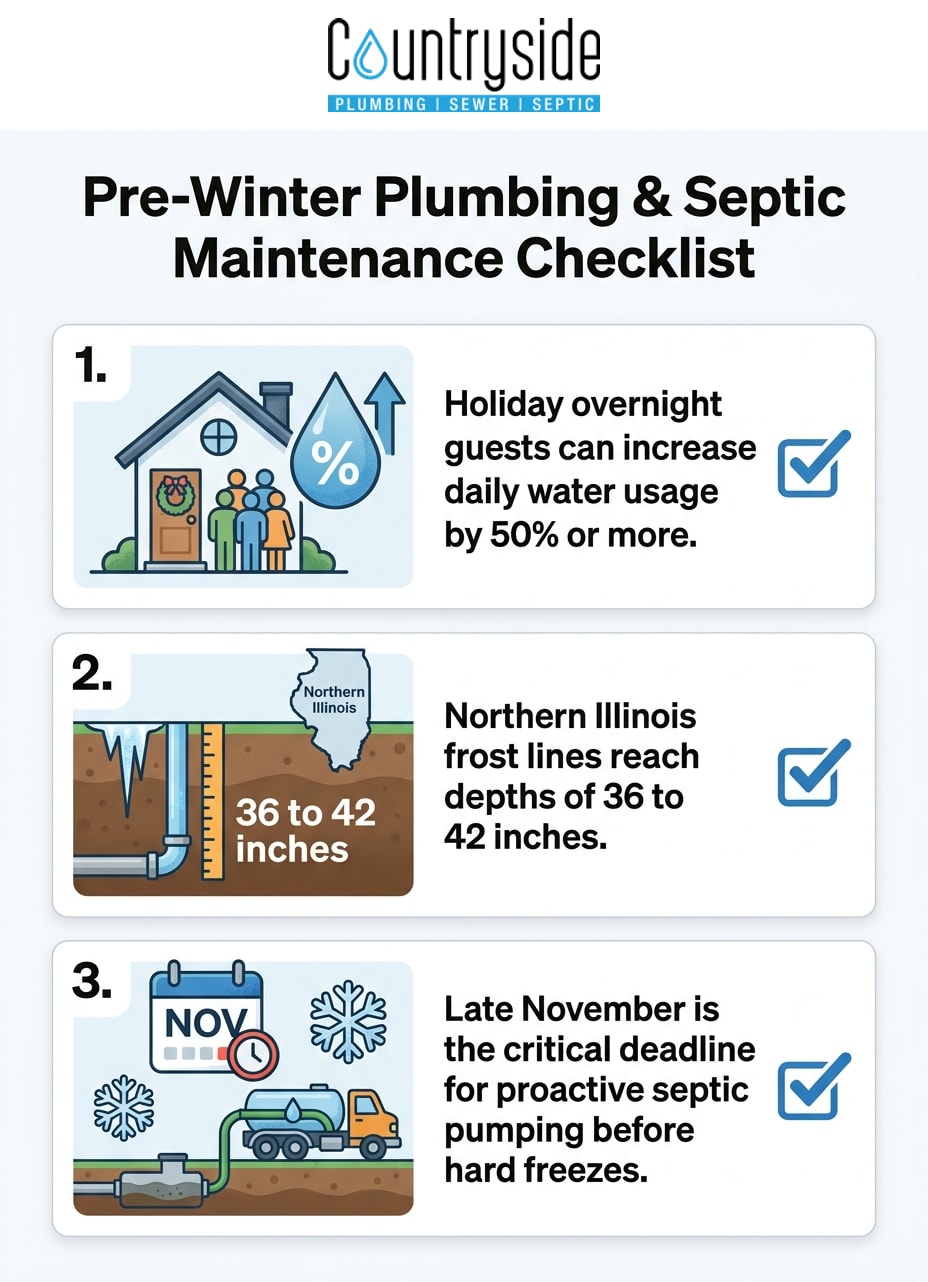
Timing is the single most critical factor in septic maintenance, especially when dealing with the reality of Antioch's freezing winters and wet spring thaws. During peak winter, our excavation crews regularly battle Northern Illinois frost lines that typically reach depths of 36 to 42 inches. That means the soil above your septic tank and drain field turns into a solid block of ice and hardened earth.
If you wait until mid-winter to address a failing septic system, emergency excavation becomes significantly more labor-intensive, highly disruptive to your landscaping, and severely limits the options available for safe, effective repair. Digging through three feet of frozen ground requires heavy machinery that can further compact the soil and damage the surrounding drain field. Furthermore, as the frozen winter transitions into a wet spring thaw, the ground becomes oversaturated, making repairs even messier.
The late November first hard freeze is your natural deadline. Assessing the health of your tank, checking the baffles, and evaluating the soil condition must happen while the ground is still yielding. Establishing a routine schedule avoids these seasonal emergencies entirely. By enrolling in a preventative maintenance plan, you ensure your system is evaluated and serviced at the optimal time of year, long before the frost line deepens.
Your outdoor plumbing and the physical space above your septic system require just as much attention as your indoor pipes. The harsh weather in Antioch, IL and Lake County can wreak havoc on exterior components if they are not properly prepped.
• Disconnect and store all garden hoses: Leaving a hose attached to an outdoor spigot traps water inside. When that water freezes, the ice expands backward into the pipe inside your home, causing it to rupture. Disconnect, drain, and store hoses in a garage or shed.
• Protect the drain field from heavy traffic: Keep heavy machinery, parked cars, and holiday overflow parking completely off the septic drain field. The weight compacts the soil, crushing the underground pipes and destroying the field's ability to absorb wastewater.
• Avoid compacting snow over the septic system: While a natural layer of fluffy snow acts as an insulator for your septic tank, compacted snow and ice drive frost deeper into the soil. Never build ice rinks, pile plowed snow, or drive snowmobiles over the drain field.
• Reroute gutters and downspouts: Clear your gutters of late fall leaves and ensure all downspouts direct rainwater and melting snow far away from the septic tank and drain field. Oversaturating the drain field with roof runoff prevents the system from properly filtering household wastewater.
The problem: Homeowners often struggle to know where DIY maintenance ends and professional servicing begins. When 32-degree overnight lows arrive, making a mistake with your septic system can lead to a catastrophic backup.
The cause: Biological activity inside the septic tank slows down significantly in cold weather. If sludge and scum levels are already too high heading into winter, the tank loses its capacity to separate solids from liquids. This causes raw solids to push out into the drain field, leading to failure. However, accessing buried septic components to check these levels is never a DIY project, especially as ground conditions harden.
The solution: You must clearly distinguish between tasks you can handle and tasks that require a licensed professional. If you notice warning signs like slow drains throughout the house, gurgling sounds from your toilets, or foul odors in the yard, the system is already struggling and requires immediate professional intervention from our team.
• Insulating exposed indoor pipes — Licensed Professional Servicing: Pumping and cleaning the septic tank
• Disconnecting outdoor garden hoses — Licensed Professional Servicing: Inspecting tank baffles and structural integrity
• Sealing drafts near plumbing fixtures — Licensed Professional Servicing: Evaluating drain field soil absorption
• Rerouting downspouts away from the field — Licensed Professional Servicing: Repairing underground pipes or distribution boxes
If you hear unusual sounds coming from your system's mechanical parts, it is time to call an expert for diagnosing strange noises from your septic aerator before the motor fails completely in the freezing cold.
If your property utilizes an Aerobic Treatment Unit (ATU) rather than a conventional gravity-fed septic tank, your winterization checklist requires specialized attention. Aerobic systems rely heavily on mechanical components—specifically air compressors, aerators, and effluent pumps—to actively inject oxygen into the wastewater and move it through the treatment stages. These moving parts are particularly sensitive to freezing temperatures.
Before the late November first hard freeze, the electrical components and air lines must be thoroughly inspected. If condensation builds up in an air line and freezes, it blocks the oxygen supply, killing the aerobic bacteria and causing the system to fail rapidly. Similarly, effluent pumps sitting in cold water can suffer mechanical failure if electrical connections are compromised by frost heaving.
Because of the complex mechanical and electrical parts involved, aerobic system winterization is strictly a job for licensed professionals. At Countryside Plumbing Sewer and Septic, we have decades of specialized local expertise handling both conventional and aerobic septic systems throughout Northern Illinois. Our qualified technicians can ensure your ATU is calibrated for winter. Regular, specialized care for these advanced systems extends the lifespan of the motors and prevents costly emergency replacements during the worst weather of the year. Ensure your system is ready by scheduling an aerobic treatment unit inspection today.
A comprehensive winter checklist should prioritize protecting your plumbing and septic systems before the ground freezes in Antioch, IL and Lake County. Key tasks include disconnecting outdoor hoses, insulating exposed pipes in unheated areas, and ensuring gutters direct water away from your drain field. Additionally, scheduling a professional septic assessment should be at the top of the list to prevent mid-winter backups.
Start by locating your main water shut-off valve so you can act quickly in an emergency. Seal any drafts around areas where pipes enter the home to keep cold air out. Finally, apply foam pipe insulation to any exposed lines in basements, crawlspaces, or garages to create a thermal barrier against freezing temperatures.
The most important step is keeping all heavy traffic, vehicles, and compacted snow off the drain field to prevent frost from driving deeper into the soil. Ensure your roof runoff is directed far away from the septic area to avoid oversaturation. Most importantly, have a licensed professional check your sludge levels before the cold weather slows down the natural bacterial breakdown process.
Pumping your tank before winter ensures there is adequate space for wastewater, especially if you plan on hosting holiday guests. Cold temperatures slow down the biological treatment process, meaning a tank that is already full of sludge will struggle to process new waste. Removing excess solids now prevents raw sewage from pushing into your drain field when the ground is frozen.
While the exact temperature varies based on soil type and snow cover, problems typically begin when ambient temperatures consistently drop below freezing, driving the frost line down. In Northern Illinois, our team sees the frost line reach 36 to 42 inches deep during peak winter. If your pipes are not properly graded or if there is standing water in the lines, they can easily freeze at these depths.
Yes, a sudden influx of overnight guests can absolutely trigger a backup in an aging or neglected system. Extra showers, loads of laundry, and constant dishwasher use can increase daily water volume by 50% or more. If the tank is already near capacity or the drain field is sluggish due to cold, saturated soil, this extra water can overwhelm the system.
Completing your seasonal home maintenance checklist before the weather turns is the best way to protect your property and your wallet. When 32-degree overnight lows hit, the time for preventative care has passed. By taking care of your indoor pipe insulation, managing your outdoor drainage, and respecting the frost line, you set your home up for a successful winter.
Ultimately, a smooth holiday season comes down to a clear understanding of what you can winterize yourself and when it is time to call in an expert. Do not wait for a backup to disrupt your family gatherings. Secure your peace of mind and ensure your system is ready for the cold by booking a professional septic inspection with Countryside Plumbing Sewer and Septic today.
See why homeowners trust us for reliable, responsive service and lasting plumbing solutions.

Jordan and his team are very responsive and helpful with all questions and issues related to our septic system. I can reference them with the highest regards!
Jordan is a great guy who seems to genuinely care about delivering quality work. Not only did he fix the problem quickly and efficiently, but also pointed out that the ejector pump in my basement had installed the wrong kind and that there were some other parts used that are not up to code.
Had a great experience with Countryside. Called with a fairly urgent issue and Jordan was responsive and out the house fast. Spent hours diagnosing my problem. Prices were competitive and he took the time to explain the situation and options. Highly recommend.
I reached out to Countryside this past June when the pipe from my house to the septic tank broke. Jordan responded to my call quickly, gave me a very reasonable quote, and immediately fit me into his schedule- which I was extremely thankful for because my yard was getting pretty smelly. Jordan is an expert in his field.
Jordan and his crew at Countryside just installed and hooked up a new septic tank for us. We could not be happier with the result! They are professional, easy to talk to, and kind. We highly recommend them,
Jordan and his team are very responsive and helpful with all questions and issues related to our septic system. I can reference them with the highest regards!