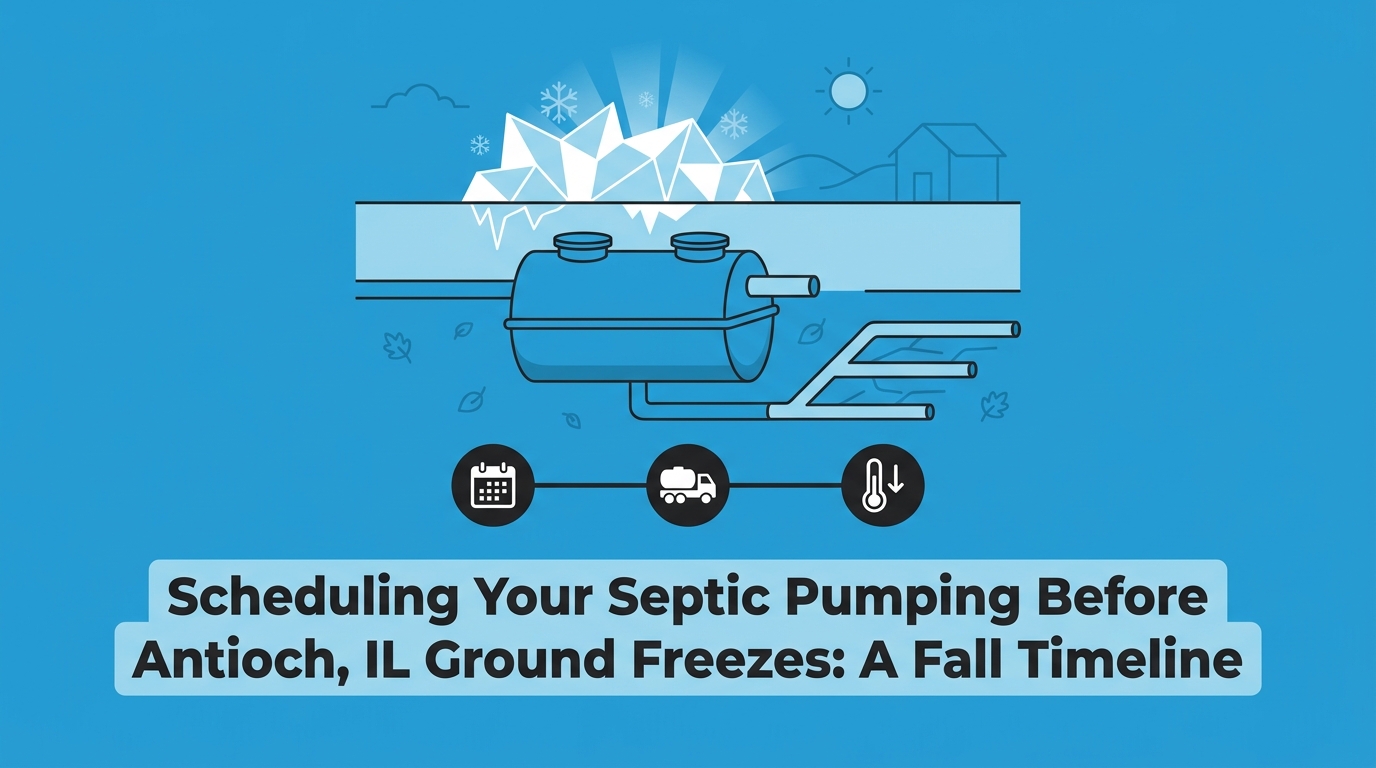
Pre-Winter Septic Troubleshooting: Early Signs You Need Septic System Repair
What happens to shallow septic lines during a hard freeze? Apply these home maintenance tips and troubleshooting to protect your property before winter hits.
Are you truly prepared for the impending temperature drops, or are you just hoping your property survives another harsh winter? When it comes to effective home maintenance tips and troubleshooting, timing is absolutely everything. Moving beyond basic yard cleanup is critical as the mid-fall / October pre-freeze window closes. Every year, our team at Countryside Plumbing Sewer and Septic sees homeowners face the severe consequences of vulnerable shallow septic lines and frozen outdoor hose bibs simply because they waited too long to take action.
Taking action now prevents minor vulnerabilities from turning into major property damage. If you want to avoid a mid-winter disaster, scheduling a professional septic inspection is the most reliable way to know where your system stands. There is a distinct line between simple, safe do-it-yourself tasks and complex situations that require licensed professional intervention. By understanding what you can handle and what needs expert attention, you protect your home, your family's health, and your peace of mind before the ground turns to solid ice.
Understanding regional climate vulnerabilities is the first step in protecting your underground utilities. In Antioch, IL, and the surrounding region, deep winter freezes penetrate the soil aggressively. The regional frost line typically reaches between 36 and 42 inches below the surface. Any pipes, tanks, or utility lines sitting above this depth are in direct danger of freezing solid if not properly managed or insulated.
In our experience serving Antioch and surrounding Lake County rural properties, we consistently see how threatening this frost line can be. These homes often feature shallow septic lines and drain fields that sit closer to the surface due to local soil conditions and high water tables. During the wet spring thaws, the soil around the drain field becomes heavily saturated. When this moisture is followed by the deep winter freezes typical of Northern Illinois, the saturated soil expands, putting immense physical stress on the delicate pipes and distribution boxes underground.
Fixing a frozen or damaged line is significantly harder once the ground is completely frozen. Excavation through three feet of solid, icy earth is time-consuming, highly disruptive, and incredibly difficult. If a failure occurs in January, you are facing an emergency scenario that could have been prevented with early intervention. This is why our technicians always recommend securing septic tank repair and replacement services while the soil is still soft and workable as a critical strategy for rural homeowners.
• Soil Condition — Mid-Fall (Pre-Freeze): Soft, workable, easy to excavate — Deep Winter (Frozen Ground): Solid ice, requires heavy breaking equipment
• System Stress — Mid-Fall (Pre-Freeze): Normal operational levels — Deep Winter (Frozen Ground): High stress from expanding frozen ground
• Timeline — Mid-Fall (Pre-Freeze): Standard scheduling available — Deep Winter (Frozen Ground): Emergency response required for backups
• Property Disruption — Mid-Fall (Pre-Freeze): Minimal landscape impact — Deep Winter (Frozen Ground): Extensive yard damage from frozen excavation
Completing your property maintenance requires a clear plan. During the mid-fall / October pre-freeze period, separating safe DIY tasks from jobs that require a licensed professional ensures your home is protected without risking accidental damage. The physics of freezing water are unforgiving; when water freezes, it expands by approximately 9%. If this expansion happens inside a closed pipe, the pressure builds until the pipe physically bursts. Completing this checklist before the first major frost hits is your best defense.
Safe DIY Tasks You Can Complete Today:
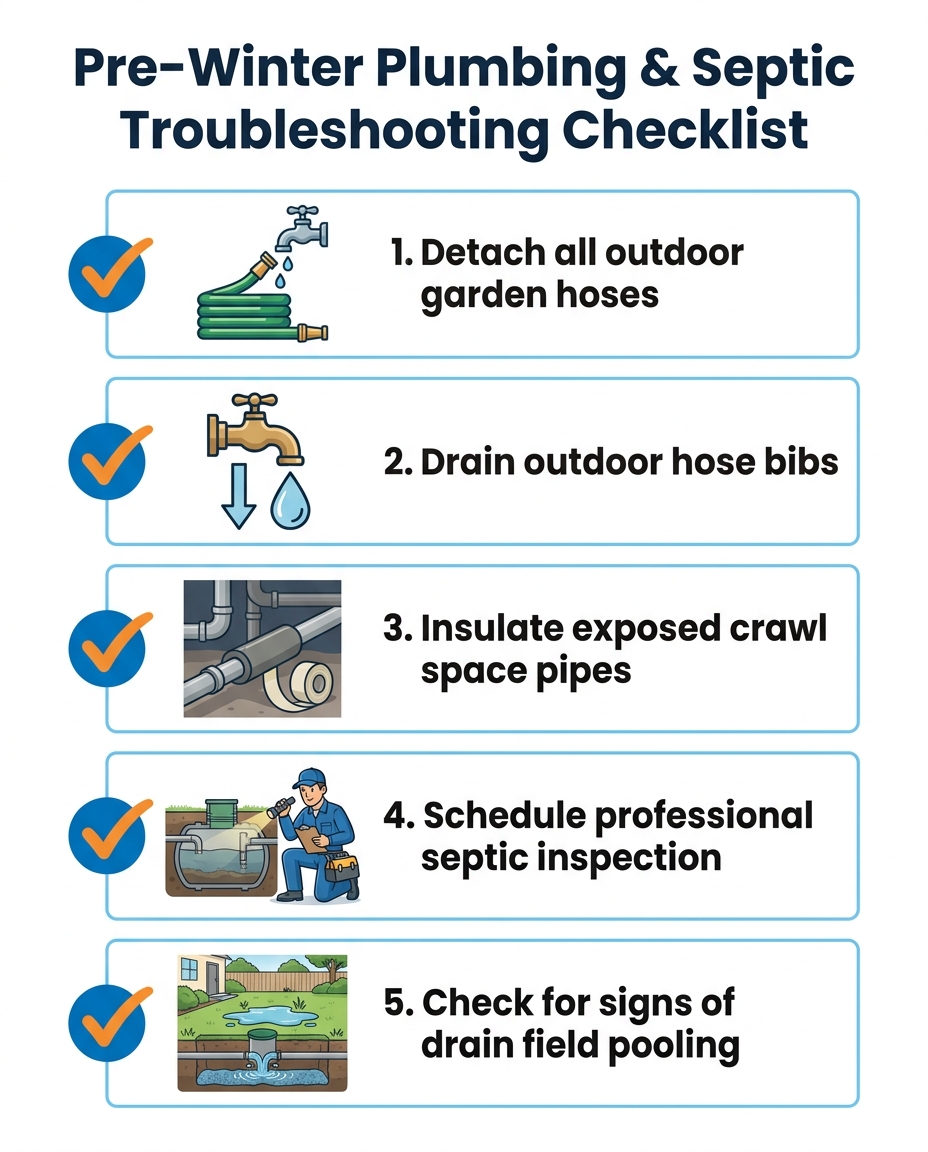
• Detaching garden hoses: Always disconnect hoses from outdoor spigots. Leaving a hose attached traps water in the fixture. When that water expands by 9%, it pushes back into the house, causing the interior pipe to burst behind your walls.
• Draining outdoor faucets: If you have shut-off valves inside your home for your exterior hose bibs, turn them off and open the outside faucet to let any remaining water drain out completely.
• Insulating exposed accessible pipes: Use foam pipe insulation sleeves on any visible water lines running through unheated spaces like garages or utility rooms.
• Clearing drain field debris: Remove heavy branches, leaves, and any vehicles or heavy equipment from the area directly above your septic tank and drain field to prevent soil compaction.
Tasks Requiring Professional Expertise:
• Evaluating tank levels: A licensed technician must check the sludge and scum layers to determine if pumping is necessary before winter.
• Inspecting drain fields: Professionals use specialized cameras and tools to ensure the effluent is distributing correctly and the lines are clear of early blockages.
• Checking mechanical aerators: Aerobic systems require precise mechanical function to survive the winter. A professional tune-up ensures the motor and air compressor are ready for continuous cold-weather operation.

Home maintenance tips and troubleshooting strategies are only effective if you know what warning signs to look for. Diagnosing potential septic failures early allows you to act before those failures become mid-winter emergencies. In Antioch and surrounding Lake County rural properties, our technicians notice that the signs of a struggling system often appear just as the weather begins to cool.
Visual signs are usually the first indicator that your drain field is failing. If you notice unusually lush, bright green grass growing exclusively over your septic tank or drain field while the rest of the yard is going dormant, effluent is likely surfacing. Spongy, wet soil in this area is an even stronger red flag. Olfactory warning signs follow closely behind. Sewage odors lingering in the yard, near the tank, or backing up into lower-level basement drains indicate that the system is no longer processing waste efficiently.
Mechanical warning signs should never be ignored. If you hear unusual gurgling from your drains or strange noises coming from your septic aerator, the system is struggling to breathe or move fluids. Ignoring these signs in the fall guarantees a much more complex, highly disruptive repair scenario once the ground freezes solid.
Drop boxes are critical components in a septic system, responsible for evenly distributing the treated effluent into the various lines of the drain field. When these components fail or shift due to ground movement, the effluent cannot distribute properly. Symptoms of failing distribution components include localized pooling water in the yard and persistently slow drainage in the house.
Replacing these parts requires professional excavation, which must be timed correctly. Our crew recently worked with a local homeowner who discovered this during a wet season when five drop boxes in their septic system required replacement. Because the ground was workable, our technicians were able to dig up and replace all five drop boxes over two days, leaving the septic system looking and working great. If that same failure had occurred in January, the necessary excavation would have been drastically more difficult and disruptive to the property.
Household plumbing troubleshooting is directly connected to your overall septic and sewer health. A single slow drain in a bathroom sink might just be a local clog caused by hair or soap scum. However, when you experience multiple slow drains across the house—especially in lower-level fixtures like basement showers or utility sinks—it indicates a systemic issue in your main sewer line or septic tank.
During the mid-fall / October pre-freeze window, addressing these systemic slowdowns is vital. Slow drains are often caused by the accumulation of items that should never be flushed down a septic system. Fats, oils, and grease (FOG) solidify as temperatures drop, creating stubborn blockages in the pipes. Flushable wipes, feminine hygiene products, and heavy paper towels do not break down in a septic tank; they accumulate, tangle, and form dense clogs that prevent wastewater from flowing out to the drain field.
When faced with a slow drain, many homeowners reach for harsh chemical drain cleaners. This is a dangerous mistake for septic owners. Chemical cleaners destroy the beneficial bacteria inside the septic tank. These bacteria are essential for breaking down solid waste; without them, the tank fills up rapidly with undigested solids, leading to catastrophic backups. One family called us to deal with a similar headache last year, facing leaking toilets and kitchen plumbing issues simultaneously. Our professional team was able to step in and fix the problems correctly the first time, keeping the process pain-free and safe for the underlying plumbing infrastructure.
If plunging the drain does not resolve the issue, it is time to stop troubleshooting and call us for professional drain cleaning. Licensed experts use specialized equipment to safely clear blockages without harming your pipes or your septic ecosystem.
While much attention is given to outdoor hoses and septic tanks, uninsulated pipes hidden within the home are highly vulnerable during the first hard freeze. In Antioch and surrounding Lake County rural properties, high-risk areas for pipe freezing include unheated crawl spaces, exterior walls, and unfinished basements. These spaces often lack the climate control needed to keep water lines safely above freezing temperatures.
Identifying drafts is the first step in protecting these vulnerable plumbing lines. Inspect the perimeter of your crawl space and basement for gaps around windows, doors, and cable penetrations. Cold air blowing directly onto a copper or PVC pipe dramatically accelerates the freezing process. Insulating these pipes with foam sleeves and sealing the drafts can prevent a disaster.
If you turn on a faucet on a cold morning and only a trickle of water comes out, you must take immediate action. The very first step if a pipe is suspected to be frozen is to locate and shut off the main water valve to the house. This prevents a massive flood if the pipe has already split. One of our customers experienced this firsthand during a cold snap when a pipe burst early in the morning. Our emergency response team arrived quickly to repair the line, saving the home from extensive water damage and restoring functionality.
The potential structural damage caused by burst pipes is immense. Water pouring into a crawl space or basement can destroy drywall, ruin electrical systems, and compromise the foundation. If you cannot locate the frozen section, or if the pipe has already split, securing sewer repair services and emergency plumbing support immediately is crucial to protecting your home.
How do I prepare my septic tank for winter?
Preparing your septic tank for winter involves scheduling a professional inspection and pumping if necessary, while also protecting the drain field from compaction. During the mid-fall / October pre-freeze window, ensure that no heavy vehicles or equipment are parked over the tank or drain field. Let the grass grow slightly longer over the field to provide a natural layer of insulation against the cold.
Can a septic drain field freeze?
Yes, a septic drain field can freeze, especially if it is a shallow system exposed to deep, prolonged cold. Freezing usually occurs when there is a lack of snow cover to insulate the ground, or if the system is suffering from slow drainage that leaves standing water in the pipes. Regular usage of warm water in the house helps keep the effluent moving and prevents freezing.
What are the first signs a septic system is failing?
The first signs of a failing septic system include slow-draining sinks and toilets, gurgling sounds in the plumbing, and sewage odors around the tank. You may also notice unusually green, lush grass or spongy, wet soil directly over the drain field. Addressing these signs early prevents severe backups into your home.
Why do septic pipes freeze in the winter?
Septic pipes freeze in the winter when the frost line drops below the depth of the pipes, particularly if there is standing water inside them due to a clog or improper sloping. Compacting the soil above the pipes by driving over them pushes the frost deeper. Leaking toilets or dripping faucets can also send a slow trickle of water into the system that rapidly freezes into a solid blockage.
How do you troubleshoot a septic system backup?
Troubleshooting a septic system backup begins with stopping all water usage in the house immediately to prevent further flooding. Check multiple drains to determine if the issue is isolated to one fixture or systemic. If all lower-level drains are backing up, do not use chemical drain cleaners; you must call a licensed professional to inspect the main sewer line and the tank levels.
How often should a residential septic system be professionally inspected?
The EPA recommends having your residential septic system professionally inspected every 1 to 3 years. The exact frequency depends heavily on the size of your household, the size of the tank, and the volume of wastewater generated. Regular inspections catch minor issues before they require major excavation.
Completing your mid-fall / October pre-freeze maintenance provides incredible peace of mind. Knowing that your home is secure against the impending deep freezes allows you to enjoy the winter months without the constant fear of burst pipes or failing drain fields. When reviewing your home maintenance tips and troubleshooting checklist, always remember the distinction between safe DIY tasks, like detaching garden hoses, and jobs that demand licensed expertise, like evaluating tank levels and diagnosing drain field health.
Do not wait until the ground is solid ice to discover a problem. Schedule your professional evaluations and tune-ups before the frost line drops. If the worst does happen during a holiday or a deep-freeze weekend, having a trusted partner like Countryside Plumbing Sewer and Septic with 24/7 emergency response availability provides an essential safety net for unexpected severe backups. Take the necessary steps today to protect your plumbing and septic infrastructure, ensuring your home remains safe, warm, and fully functional all winter long.
See why homeowners trust us for reliable, responsive service and lasting plumbing solutions.

Jordan and his team are very responsive and helpful with all questions and issues related to our septic system. I can reference them with the highest regards!
Jordan is a great guy who seems to genuinely care about delivering quality work. Not only did he fix the problem quickly and efficiently, but also pointed out that the ejector pump in my basement had installed the wrong kind and that there were some other parts used that are not up to code.
Had a great experience with Countryside. Called with a fairly urgent issue and Jordan was responsive and out the house fast. Spent hours diagnosing my problem. Prices were competitive and he took the time to explain the situation and options. Highly recommend.
I reached out to Countryside this past June when the pipe from my house to the septic tank broke. Jordan responded to my call quickly, gave me a very reasonable quote, and immediately fit me into his schedule- which I was extremely thankful for because my yard was getting pretty smelly. Jordan is an expert in his field.
Jordan and his crew at Countryside just installed and hooked up a new septic tank for us. We could not be happier with the result! They are professional, easy to talk to, and kind. We highly recommend them,
Jordan and his team are very responsive and helpful with all questions and issues related to our septic system. I can reference them with the highest regards!
Jordan is a great guy who seems to genuinely care about delivering quality work. Not only did he fix the problem quickly and efficiently, but also pointed out that the ejector pump in my basement had installed the wrong kind and that there were some other parts used that are not up to code.
Had a great experience with Countryside. Called with a fairly urgent issue and Jordan was responsive and out the house fast. Spent hours diagnosing my problem. Prices were competitive and he took the time to explain the situation and options. Highly recommend.
I reached out to Countryside this past June when the pipe from my house to the septic tank broke. Jordan responded to my call quickly, gave me a very reasonable quote, and immediately fit me into his schedule- which I was extremely thankful for because my yard was getting pretty smelly. Jordan is an expert in his field.
Jordan and his crew at Countryside just installed and hooked up a new septic tank for us. We could not be happier with the result! They are professional, easy to talk to, and kind. We highly recommend them,
Jordan and his team are very responsive and helpful with all questions and issues related to our septic system. I can reference them with the highest regards!