Pre-Winter Septic Troubleshooting: Early Signs You Need Septic System Repair
What happens to shallow septic lines during a hard freeze? Apply these home maintenance tips and troubleshooting to protect your property before winter hits.
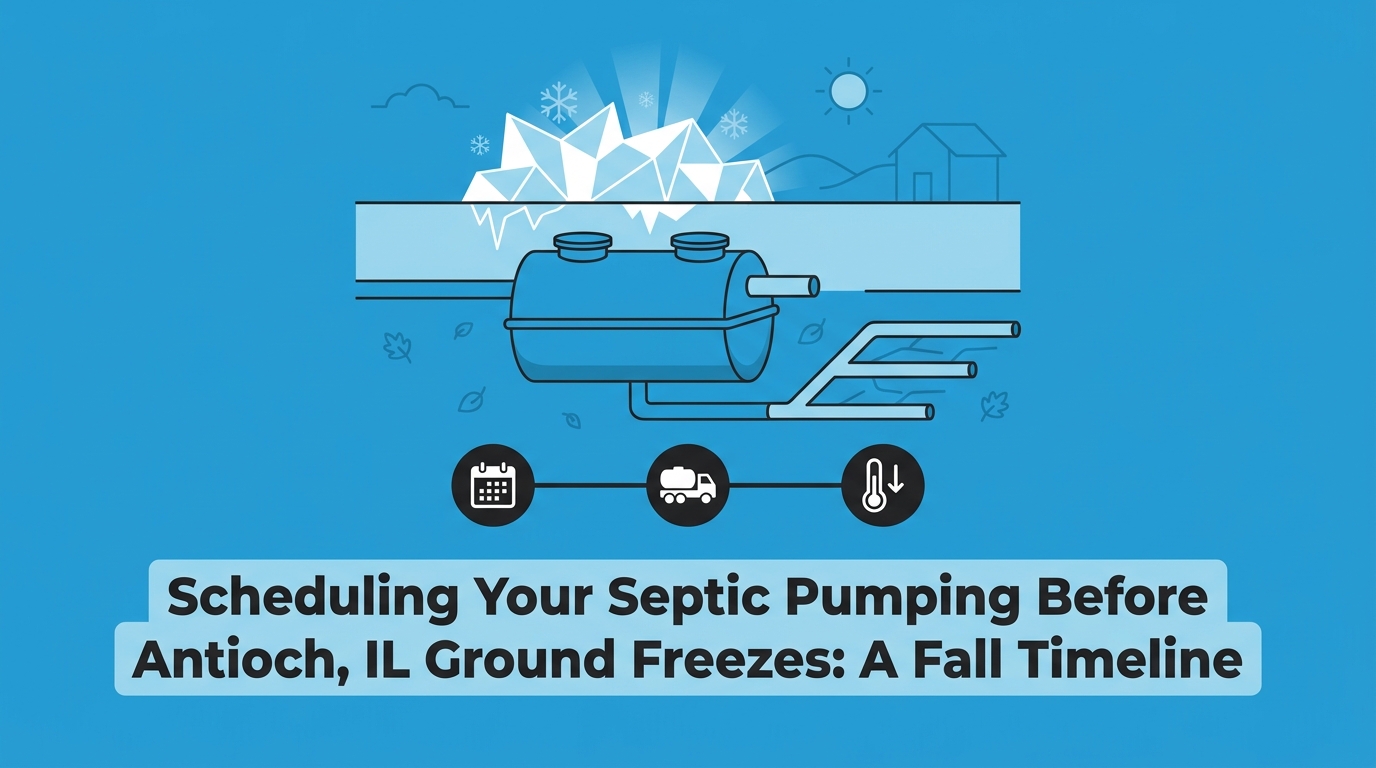
Autumn in Antioch is only weeks away, and if you rely on a private wastewater system, it is time to start planning ahead. Scheduling Your Septic Pumping Before Antioch's Ground Freezes: A Fall Timeline is one of the most critical maintenance steps you can take before the weather turns. The concrete problem many local property owners face is a full septic tank backing up during the dead of winter, right when the ground is frozen solid. You are now at a crucial decision point: schedule a routine pump-out in early September, or wait until late fall and risk a catastrophic emergency when the soil is rock hard.
At Countryside Plumbing Sewer and Septic, we constantly remind our customers that if you choose to delay, you are gambling against the Northern Illinois climate. As temperatures drop, the moisture in the soil begins to freeze, turning typical yard dirt into an impenetrable barrier. Because standard septic lids are buried underground, uncovering them once the frost sets in becomes a massive undertaking. Accessing these buried lids safely requires professional plumbing services to ensure that the tank, baffles, and surrounding pipes are not damaged during the excavation process.
Neglecting routine pumping does more than just increase your risk of a winter backup; it can escalate into a situation requiring extensive septic tank repair and replacement. When a tank overfills, the solid waste has nowhere to go but out into the delicate drain field or back up into your home's plumbing. By taking action in Antioch IL while the ground is still soft and pliable, you protect your property from the immense stress, mess, and disruption of a mid-winter plumbing failure.
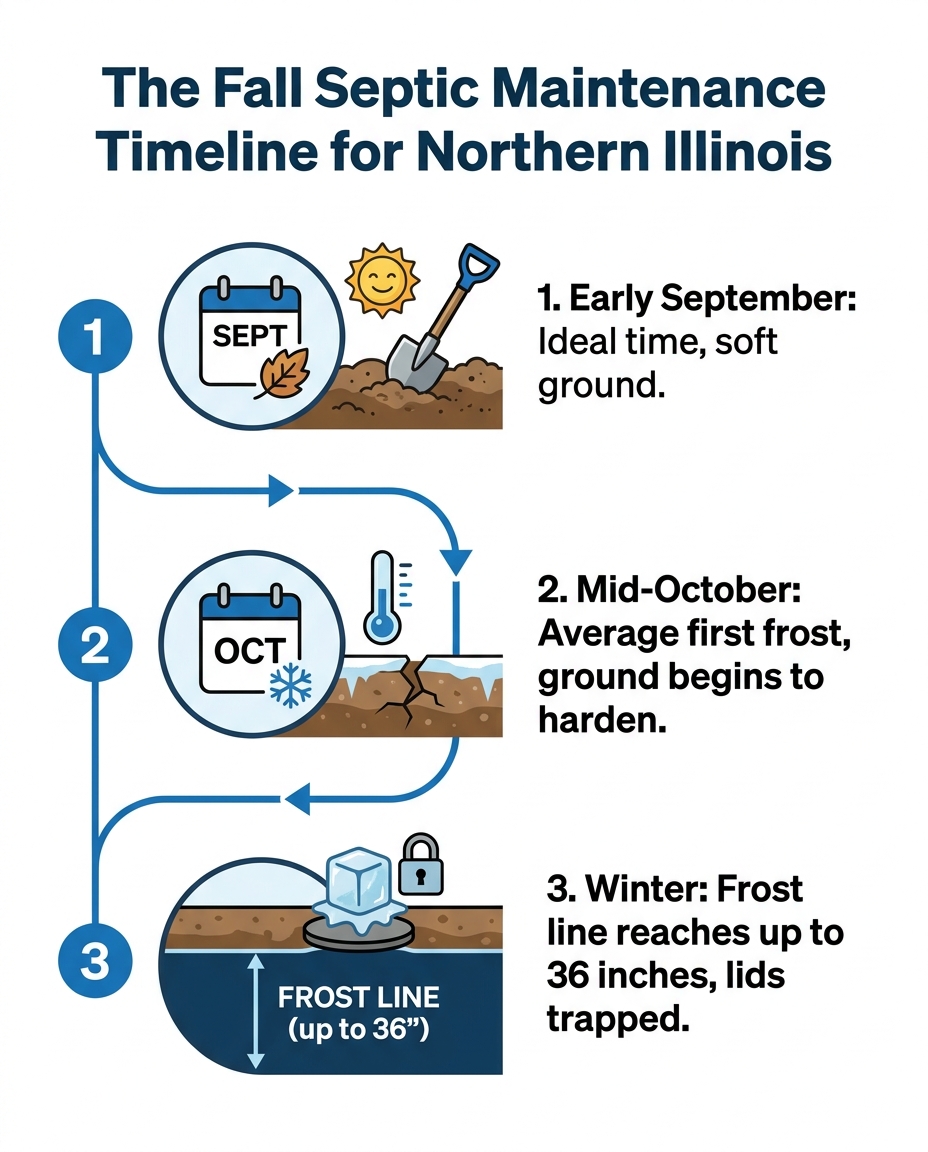
To understand why fall maintenance is so urgent, you have to look beneath the surface of your lawn. The frost line is the maximum depth to which groundwater in soil is expected to freeze. Thanks to the severe winters typical of the region, ground frost in Northern Illinois can easily reach depths of 36 inches or more. This is a critical measurement because standard septic tank lids are typically buried one to three feet below the surface, placing them squarely within the active freeze zone.
Our team at Countryside Plumbing Sewer and Septic brings years of deep local expertise regarding Northern Illinois soil conditions and weather patterns. After countless winter service calls, one thing we see often is homeowners underestimating just how hard the ground becomes. When the water trapped between soil particles freezes, the ground essentially acts like concrete. Digging through it is no longer a matter of using a standard shovel; it requires heavy-duty mechanical equipment, specialized ground heaters, and significantly more labor hours.
Historical frost data for the region indicates that the first frost typically arrives by mid-to-late October. Once that happens, the window for easy access slams shut. Uncovering a lid in early autumn takes minutes in soft, yielding soil. Attempting the exact same task in January can take hours of grueling, high-risk labor.
• Soil Texture — Early Fall Soil (September): Soft, pliable, easy to dig and move. — Deep Winter Soil (January): Rock-hard, bound by ice, acts like concrete.
• Equipment Needed — Early Fall Soil (September): Standard hand shovels or light machinery. — Deep Winter Soil (January): Jackhammers, ground thawing blankets, heavy backhoes.
• Risk to Equipment — Early Fall Soil (September): Minimal risk to buried PVC and tank lids. — Deep Winter Soil (January): High risk of shattering brittle, frozen plastic components.
• Landscaping Impact — Early Fall Soil (September): Clean cuts that backfill smoothly. — Deep Winter Soil (January): Massive frozen clods that leave deep, unfillable craters until spring.
Timing is everything when it comes to wastewater management in cold climates. To avoid the nightmare of a frozen system failure, you need a proactive strategy. Connect this timeline directly to Antioch's specific autumn temperature drops and historical freeze dates to ensure your system is prepared long before the snow flies.
This is the absolute best time to act. Scheduling your pumping in early September before Northern Illinois hard freezes guarantees that the ground is soft, the weather is predictable, and technicians can access your tank with minimal disruption to your landscaping. The soil still retains summer warmth, making any necessary digging quick and efficient. Furthermore, booking early means you beat the rush of homeowners who wait until the last minute.
By late September, overnight temperatures in Antioch begin to drop significantly. While the ground has not yet frozen solid, the surface soil starts to chill. This is your warning window. If you have not scheduled your maintenance yet, this is the time to make the call. Heavy autumn rains can also occur during this period, which can saturate the drain field and make pumping slightly messier, though still entirely manageable.
Historically, Antioch experiences its first real frost in mid-to-late October. At this point, the ground surface begins to harden. While the frost line has not yet reached the 36-inch maximum depth, digging becomes noticeably more difficult. Accessing buried lids starts to carry a higher risk, and the top layer of turf is easily damaged by excavation tools. This marks the point where routine ground access transitions from standard procedure to risky endeavor.
Once November arrives, the region enters the danger zone. The ground freezes deeper with each passing week of sub-freezing temperatures. Emergency access during these months may be severely restricted or entirely impossible without specialized thawing equipment. If your tank reaches capacity now, you are facing a high-stress, high-stakes situation.

Even if you try to stick to a regular schedule, your system might fill up faster than anticipated due to increased household usage, heavy summer rains, or a developing issue in the drain field. If you notice any of the following symptoms, it is critical to address them before the winter freeze locks your system down.
• Slow drains across the house: If just one sink is draining slowly, you likely have a localized clog. But if your kitchen sink, showers, and toilets are all sluggish simultaneously, it usually means the main line is backing up because the tank is at capacity.
• Unpleasant odors indoors or outdoors: A healthy system traps sewer gases underground. If you start smelling a foul, sulfur-like odor originating from your drains, toilets, or out in the yard near the drain field, your tank needs immediate attention.
• Spongy, unusually green grass: If the grass over your septic tank or leach field is suddenly thriving, vibrant green, and squishy to walk on—even during a dry early fall—it means untreated effluent is rising to the surface.
• Gurgling sounds in the plumbing: When a tank is overfull, trapped air is forced backward through the pipes, causing a distinct gurgling sound when you flush a toilet or run the washing machine.
If you spot these signs, searching for a local professional early in the season ensures you secure an appointment before their schedule fills up with desperate late-fall calls. We highly recommend booking a routine septic inspection to comprehensively assess your system's health. A thorough check-up evaluates the sludge layers, the integrity of the baffles, and the overall condition of the tank before the harsh winter weather arrives.
Many property owners assume that a winter backup is just a minor inconvenience that requires a bit more digging. The reality is far more complex and labor-intensive. When the soil in Antioch freezes solid, it binds together with incredible strength. Breaking through it requires specialized equipment, such as heavy-duty jackhammers, backhoes, and sometimes ground-thawing hydro-heaters, just to soften the earth enough to reach the lid.
Rushing or forcing an excavation in these conditions is incredibly risky. In sub-zero temperatures, the PVC pipes that connect your home to the tank become brittle and fragile. The concrete or plastic baffles inside the tank, as well as the lid itself, are highly susceptible to cracking if struck forcefully by digging equipment. A simple pump-out can quickly turn into a major structural repair if the frozen ground causes collateral damage during the dig.
One local homeowner found out just how extensive system work can be when they needed five drop boxes replaced in their septic system. Because the ground was still workable in early fall, our Countryside Plumbing Sewer and Septic crew was able to dig up and replace all five drop boxes over two consecutive days. The result was a septic system that looked and worked perfectly after the replacement. If that same failure had occurred in late January, the excavation process would have been drastically more complicated, likely taking much longer and causing severe disruption to the property.
Furthermore, winter digging wreaks havoc on your landscaping. When excavators pull up frozen earth, it comes out in massive, unmanageable clods. These frozen boulders cannot be properly broken down or backfilled into the hole once the work is done. You are often left with a dangerous, uneven crater in your yard that cannot be properly graded or restored until the spring thaw arrives months later. Proper digging, component replacement, and subsequent landscaping restoration require professional precision that is exceedingly difficult to execute in the freezing cold.
Understanding the worst-case scenario is the best motivation for proactive fall maintenance. A mid-winter septic failure is not just a plumbing issue; it is a full-blown household crisis that disrupts your daily life and threatens your property.
When a septic system backs up in January, the immediate impact is a complete loss of indoor plumbing. You cannot flush toilets, run the dishwasher, take a shower, or do laundry. If the pressure builds up enough, raw sewage can reverse course and flood into your lowest drains, typically in a basement or ground-floor bathroom. This introduces hazardous waste into your living space, creating a severe sanitation issue right when you are trapped indoors by the cold weather.
The primary cause of the complication is the inability to quickly access the tank. Emergency winter pumping is not always feasible. If the lid is buried under three feet of snow and two feet of frozen solid earth, technicians may spend hours just trying to locate and uncover the access point. In severe blizzards or extreme sub-zero wind chills, it may be entirely unsafe for crews to operate heavy machinery in your yard, leaving you stranded without plumbing until the weather breaks.
A frozen or failed system during the winter can lead to catastrophic damage. If the effluent freezes inside the pipes or the tank itself cracks under the pressure of expanding ice, a simple pumping service is no longer enough. Homeowners are often forced to explore full system replacements, which requires massive excavation. If you find yourself wondering how much a septic installation costs, you will quickly realize that avoiding this scenario through a simple early September pump-out is the most logical choice. Finding a reliable local professional during a blizzard is significantly harder, more stressful, and far more disruptive than securing a scheduled fall appointment.
Beyond scheduling your pumping before the ground freezes, there are several supplemental steps you can take to protect your drain field and entire wastewater system during the harsh Northern Illinois winter. These are straightforward, non-DIY property management habits that make a massive difference.
• Stop mowing the grass over the drain field in late fall: Allow the grass above your leach field to grow an extra inch or two before the snow arrives. This slightly taller grass catches and holds snow, creating a natural insulating layer that helps trap the earth's geothermal heat and prevents the frost line from driving too deep into the drain field.
• Keep heavy machinery and vehicles away: Never park cars, trucks, or ride snowmobiles over your septic tank or drain field. The weight compacts the soil. Compacted soil loses its insulating air pockets, which actively drives the frost line deeper into the ground, increasing the risk of frozen pipes.
• Manage plowed snow carefully: While a natural blanket of undisturbed snow acts as an excellent insulator for the soil, dense, compacted snow from a plow has the opposite effect. Avoid piling heavy, plowed snow over the septic tank or the leach field.
• Repair all leaky indoor fixtures: A constantly running toilet or a dripping sink sends a slow, steady trickle of water out to the septic lines. In sub-zero temperatures, this slow trickle can easily freeze inside the pipe before it reaches the tank, eventually creating a solid ice blockage that stops all wastewater flow.
Can a septic tank be pumped in the winter when the ground is frozen?
Yes, it is physically possible, but it is incredibly difficult and highly discouraged. Pumping in the winter requires breaking through frozen soil, which often involves heavy machinery and ground heaters. This process takes significantly longer, disrupts your yard, and carries a higher risk of damaging brittle, frozen PVC pipes or the tank lid itself.
Why is it harder to access a septic tank during a Northern Illinois freeze?
Because standard septic lids are buried one to three feet underground, they sit directly in the region's frost zone. When the moisture in the soil freezes, the dirt acts like solid concrete. Shovels cannot penetrate it, meaning professional crews must use jackhammers or excavators just to uncover the lid.
What happens if my septic tank or drain field freezes?
If your system freezes, wastewater cannot exit your home, leading to immediate backups in your sinks, tubs, and toilets. A frozen drain field prevents effluent from percolating into the soil, causing the tank to rapidly overfill. In severe cases, the expansion of the ice can crack the tank or shatter the underground baffles, requiring complete replacement.
When is the absolute best time of year to pump a septic tank in Antioch?
Our team strongly advises early September, just before the weather turns cold. During this window, the ground is still soft and pliable, making excavation quick and harmless to your landscaping. It also ensures your tank is completely empty and ready to handle the increased indoor usage typical of the holiday and winter seasons.
How deep is the frost line in Northern Illinois and does it affect my septic lid?
The frost line in Northern Illinois can easily reach depths of 36 inches during a severe winter. Because standard septic lids are usually buried between 12 and 36 inches deep, they are trapped right in the middle of this frozen layer. This is exactly why proactive fall maintenance is necessary to avoid digging through ice-bound earth.
Protecting your property from a winter plumbing disaster requires foresight and timely action. By securing your spot in early September before Northern Illinois hard freezes, you bypass the immense stress and disruption of trying to dig through frozen ground. Schedule your routine maintenance today to ensure your system is clear, safe, and fully prepared for whatever the winter weather brings.
See why homeowners trust us for reliable, responsive service and lasting plumbing solutions.

Jordan and his team are very responsive and helpful with all questions and issues related to our septic system. I can reference them with the highest regards!
Jordan is a great guy who seems to genuinely care about delivering quality work. Not only did he fix the problem quickly and efficiently, but also pointed out that the ejector pump in my basement had installed the wrong kind and that there were some other parts used that are not up to code.
Had a great experience with Countryside. Called with a fairly urgent issue and Jordan was responsive and out the house fast. Spent hours diagnosing my problem. Prices were competitive and he took the time to explain the situation and options. Highly recommend.
I reached out to Countryside this past June when the pipe from my house to the septic tank broke. Jordan responded to my call quickly, gave me a very reasonable quote, and immediately fit me into his schedule- which I was extremely thankful for because my yard was getting pretty smelly. Jordan is an expert in his field.
Jordan and his crew at Countryside just installed and hooked up a new septic tank for us. We could not be happier with the result! They are professional, easy to talk to, and kind. We highly recommend them,
Jordan and his team are very responsive and helpful with all questions and issues related to our septic system. I can reference them with the highest regards!
Jordan is a great guy who seems to genuinely care about delivering quality work. Not only did he fix the problem quickly and efficiently, but also pointed out that the ejector pump in my basement had installed the wrong kind and that there were some other parts used that are not up to code.
Had a great experience with Countryside. Called with a fairly urgent issue and Jordan was responsive and out the house fast. Spent hours diagnosing my problem. Prices were competitive and he took the time to explain the situation and options. Highly recommend.
I reached out to Countryside this past June when the pipe from my house to the septic tank broke. Jordan responded to my call quickly, gave me a very reasonable quote, and immediately fit me into his schedule- which I was extremely thankful for because my yard was getting pretty smelly. Jordan is an expert in his field.
Jordan and his crew at Countryside just installed and hooked up a new septic tank for us. We could not be happier with the result! They are professional, easy to talk to, and kind. We highly recommend them,
Jordan and his team are very responsive and helpful with all questions and issues related to our septic system. I can reference them with the highest regards!