Pre-Winter Septic Troubleshooting: Early Signs You Need Septic System Repair
What happens to shallow septic lines during a hard freeze? Apply these home maintenance tips and troubleshooting to protect your property before winter hits.
Is it normal for my septic drain field to smell bad in 90-degree heat, or is it a sign of a massive plumbing disaster? Walking outside on a sweltering July afternoon only to be hit with the distinct, foul odor of raw sewage is enough to trigger instant panic for any homeowner. The immediate fear is that the septic system is actively backing up into the yard or that the drain field has completely failed. However, before you assume the worst and start bracing for a massive excavation project, it is crucial to understand how extreme temperatures and heavy humidity interact with the normal gases your system produces. Determining whether the odor is simply a harmless atmospheric draft or a true biological failure dictates your next steps. At Countryside Plumbing Sewer and Septic, we believe in calming homeowner panic with trusted, experience-based diagnostic advice rather than rushing to alarmist conclusions. If you are noticing these smells, you need facts, not fear. We handle all types of plumbing and septic services, and we know exactly how local weather patterns impact system performance.
Septic systems are essentially living ecosystems buried underground. They rely heavily on living, naturally occurring anaerobic bacteria to break down the organic solid waste that flushes into the tank. Under normal, mild conditions, these microscopic organisms consume waste at a steady, manageable pace, separating the effluent into a clear liquid layer, a bottom sludge layer, and a top scum layer. But when the environment changes, so does their metabolic behavior. During July peak summer heat (90+ degrees), this biological activity kicks into absolute overdrive.
The byproduct of hyperactive bacteria: Just like a compost pile heats up and accelerates its decomposition process in the summer sun, the bacteria inside your buried septic tank become hyperactive when the ambient soil temperatures rise. As these bacteria consume waste at an accelerated rate, they generate significantly higher volumes of exhaust gases. The two primary gases produced during anaerobic digestion are hydrogen sulfide (which carries that unmistakable "rotten egg" or sewage smell) and methane.
Increased gas volume: This sudden spike in gas production means the system has considerably more exhaust to vent out into the surrounding environment than it does during the cooler months. Your tank is functioning exactly as it should by breaking down solids efficiently, but the sheer volume of gas being produced can easily overwhelm the system's normal dispersion rate. When the tank is processing waste at maximum capacity, those extra gases have to go somewhere, and understanding where they travel is the key to diagnosing the odor.
Every modern residential plumbing system is equipped with a network of roof vents. These vertical pipes are specifically designed to channel sewer gases out of the septic tank, up through the walls of your house, and release them high above the living space. Normally, these gases exit the roof vents and immediately dissipate harmlessly into the breeze, completely unnoticed by anyone on the ground. The natural wind currents carry the lighter-than-air gases away before they can settle.
However, the specific sticky, high-humidity summer days in Antioch IL and surrounding Lake County create the exact atmospheric conditions necessary for this normal venting process to fail. When high heat is paired with heavy, dense humidity, it creates a meteorological phenomenon known as an atmospheric inversion effect.
How the inversion works: Instead of hot air rising and carrying the gases away, a thick blanket of heavy, humid air sits stagnant over the neighborhood. This dense air mass physically prevents the lighter sewer gases from rising out of the roof vents. Because the gases cannot escape upward into the atmosphere, they are pushed downward by the heavy moisture in the air, sinking directly into your yard, patio, or driveway.
The deceptive downdraft: This downdraft effect is incredibly deceptive. Because the heavy hydrogen sulfide gas settles low to the ground, it often hovers right over the lawn, making it seem exactly as though the drain field itself is the source of the leak. In reality, the leach field might be perfectly fine; you are simply smelling the roof vent exhaust that the local weather has trapped at ground level. Understanding this physics principle can save you from unnecessary panic during a heatwave.
So, how do you tell the difference between a temporary weather anomaly and a failing underground system? Weather-related odors usually fluctuate with the wind and the time of day. You might notice the smell is entirely absent in the morning breeze but becomes overwhelmingly strong in the heavy, stagnant evening air. True drain field failure, on the other hand, presents a consistent, highly localized odor directly over the buried leach field components, regardless of the humidity or wind direction. If the smell is accompanied by physical changes in the yard or a decline in your home's plumbing performance, it is more than just a downdraft. Checking the physical ground condition is the most reliable way to rule out an atmospheric inversion.
• Odors fluctuate based on wind and time of day — True Drain Field Failure: Odor is constant and localized over the tank or field
• Ground over the drain field is firm and dry — True Drain Field Failure: Ground is spongy, soggy, or pooling with dark water
• Grass looks uniform across the yard — True Drain Field Failure: Unusually lush, bright green grass over septic lines
• Indoor drains empty quickly and quietly — True Drain Field Failure: Sinks, tubs, and toilets drain slowly or gurgle
• Smell is strongest near the house/roofline — True Drain Field Failure: Smell is strongest when standing directly on the yard
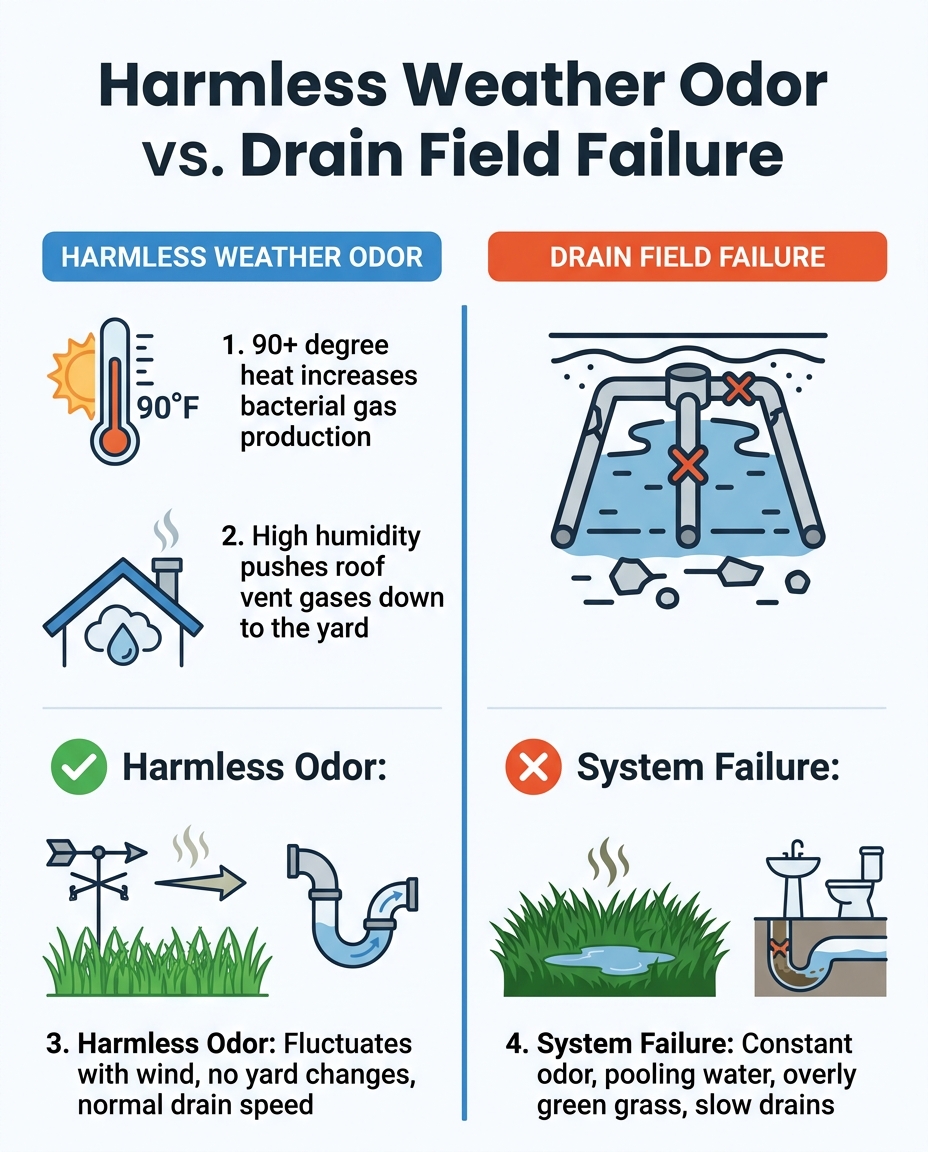

If the sewage smell in your yard is not fluctuating with the summer humidity, you need to look for concrete evidence of a biological or mechanical breakdown. When a drain field fails, it means the soil is no longer capable of absorbing and filtering the liquid effluent leaving the tank. This forces contaminated water back up to the surface or back into your home through hydrostatic pressure. Watch for these definitive physical warning signs:
• Spongy, soggy ground: If you walk over the drain field and the soil feels soft, squishy, or you see visible pooling water during a dry July stretch, the field is entirely saturated and failing to drain.
• Unusually lush patches of grass: Effluent acts as a powerful fertilizer. If you have bright green, rapidly growing stripes of grass exclusively over the septic components while the rest of the lawn is dry and dormant, the system is leaking upward into the topsoil.
• Slow-draining fixtures inside: When the field cannot accept more water, that backup translates to slow-draining sinks, tubs, and toilets inside the home. The water simply has nowhere to go.
• Gurgling plumbing sounds: If you hear a rhythmic gurgling noise coming from your drains when the washing machine empties or a toilet flushes, it indicates trapped air fighting against a backed-up system.
When these physical signs are present, critical components like distribution pipes or drop boxes may have failed and will require professional excavation. For example, a local homeowner recently faced a situation where five drop boxes in their septic system had failed, causing severe drainage issues. A professional team dug up and replaced all five boxes over two days, restoring the system so it looked and worked great again. Understanding the scope of these repairs can help you prepare, which is why we often discuss how much a septic installation costs with homeowners facing complete drain field saturation.
Deciding when to wait out the weather and when to call for help comes down to the presence of physical symptoms. If you only notice an odor with absolutely no physical changes to the yard and no slow drains inside the house, the best course of action is to monitor the system for a few days. Wait to see if a change in the weather—such as a drop in humidity or a strong breeze—resolves the smell completely.
However, if any physical warning signs appear, time is of the essence. Avoid using heavy water appliances like washing machines or dishwashers, as this will only push more water into an already overwhelmed system. Seek an expert evaluation immediately. A trained technician can inspect the tank levels, evaluate the distribution boxes with specialized cameras, and probe the field lines without unnecessary or destructive digging. Early detection of a struggling drain field can often prevent a complete, catastrophic system backup into your home. Scheduling a professional septic inspection provides the definitive answers you need to protect your property and your family's health.
When peak summer heat hits, we receive countless calls from concerned homeowners. Whether you have a traditional tank or need an aerobic system inspection, understanding the basics can help put your mind at ease. Here are targeted answers to the most common questions we hear.
The increased heat of summer causes the anaerobic bacteria inside your tank to become highly active, producing significantly more gas. When this high heat is combined with heavy humidity, the dense air traps these foul-smelling gases close to the ground. Instead of dissipating into the atmosphere, the exhaust from your roof vents sinks into your yard.
The most definitive signs of failure are physical changes to the yard, such as pooling water, soggy soil, and overly green grass directly over the leach lines. Inside the home, you will likely experience slow drains and gurgling toilets. These symptoms indicate the soil can no longer absorb effluent, forcing wastewater back to the surface.
Occasional whiffs of septic gas near the roof vent or during periods of heavy humidity are entirely normal and harmless. The gases are a natural byproduct of the biological breakdown happening in the tank. However, constant, overpowering smells at ground level that do not fluctuate with the weather are not normal and require professional investigation.
The safest approach is to ensure your roof vents are completely clear of debris, leaves, or bird nests to promote proper airflow. Avoid masking odors with harsh chemicals, additives, or bleach, as these can kill the vital bacteria your tank needs to function. If the smell persists despite clear vents and low humidity, contact a professional to check the system's mechanical components.
Yes, dense humid air creates a localized atmospheric inversion effect. This heavy moisture blanket prevents lighter sewer gases from dispersing upward into the sky. Instead, the humidity physically pushes the exhaust down to the ground, causing the odors to linger heavily around your property until the weather breaks.
Aerobic systems use oxygen to break down waste and generally produce fewer foul, sulfur-like odors than standard anaerobic tanks. Because they operate differently, a strong, persistent smell from an aerobic system is rarely just a weather phenomenon. It often indicates that the aerator motor has failed or needs immediate attention to restore oxygen flow.
Smelling raw sewage in your yard is never a pleasant experience, but a sudden odor during a 90-degree heatwave does not automatically mean a ruined drain field. By understanding how humidity traps vent gases and by checking for physical symptoms like pooling water or slow drains, homeowners can make informed, rational decisions. When in doubt, having an expert assess the system ensures minor issues are caught before they become major disruptions. Whether you are dealing with a harmless weather inversion or need a comprehensive septic tank repair or replacement, Countryside Plumbing Sewer and Septic is here to help. We provide the clear, non-alarmist diagnostic advice you need to protect your property and enjoy the rest of your summer with complete confidence.
See why homeowners trust us for reliable, responsive service and lasting plumbing solutions.

Jordan and his team are very responsive and helpful with all questions and issues related to our septic system. I can reference them with the highest regards!
Jordan is a great guy who seems to genuinely care about delivering quality work. Not only did he fix the problem quickly and efficiently, but also pointed out that the ejector pump in my basement had installed the wrong kind and that there were some other parts used that are not up to code.
Had a great experience with Countryside. Called with a fairly urgent issue and Jordan was responsive and out the house fast. Spent hours diagnosing my problem. Prices were competitive and he took the time to explain the situation and options. Highly recommend.
I reached out to Countryside this past June when the pipe from my house to the septic tank broke. Jordan responded to my call quickly, gave me a very reasonable quote, and immediately fit me into his schedule- which I was extremely thankful for because my yard was getting pretty smelly. Jordan is an expert in his field.
Jordan and his crew at Countryside just installed and hooked up a new septic tank for us. We could not be happier with the result! They are professional, easy to talk to, and kind. We highly recommend them,
Jordan and his team are very responsive and helpful with all questions and issues related to our septic system. I can reference them with the highest regards!
Jordan is a great guy who seems to genuinely care about delivering quality work. Not only did he fix the problem quickly and efficiently, but also pointed out that the ejector pump in my basement had installed the wrong kind and that there were some other parts used that are not up to code.
Had a great experience with Countryside. Called with a fairly urgent issue and Jordan was responsive and out the house fast. Spent hours diagnosing my problem. Prices were competitive and he took the time to explain the situation and options. Highly recommend.
I reached out to Countryside this past June when the pipe from my house to the septic tank broke. Jordan responded to my call quickly, gave me a very reasonable quote, and immediately fit me into his schedule- which I was extremely thankful for because my yard was getting pretty smelly. Jordan is an expert in his field.
Jordan and his crew at Countryside just installed and hooked up a new septic tank for us. We could not be happier with the result! They are professional, easy to talk to, and kind. We highly recommend them,
Jordan and his team are very responsive and helpful with all questions and issues related to our septic system. I can reference them with the highest regards!