Pre-Winter Septic Troubleshooting: Early Signs You Need Septic System Repair
What happens to shallow septic lines during a hard freeze? Apply these home maintenance tips and troubleshooting to protect your property before winter hits.
When July temperatures peak and late summer dry spells set in across northern Illinois, most homeowners are heavily focused on keeping their lawns green, but the real concern lies entirely underground. If you are wondering exactly what happens inside your septic tank when the ground bakes dry in Antioch, the short answer is that extreme heat and rapidly evaporating moisture disrupt the entire biological and mechanical balance of your wastewater system. At Countryside Plumbing Sewer and Septic, our team typically sees property owners only worry about their drain fields during heavy spring floods, assuming that dry weather gives the system a break. However, our field experience shows that extreme heat presents a severe, invisible threat that can cause irreversible damage to the soil matrix and the biological ecosystem inside the tank.
Recognizing the early signs of drought-induced stress is critical before the surrounding earth hardens completely and blocks effluent absorption. By understanding these underground mechanics, you can take proactive steps to protect your property. For a thorough evaluation of how your system is handling the heat, scheduling a professional septic inspection with our crew is the safest way to map out vulnerabilities before the soil completely hardens.
The geological makeup of northern Illinois plays a massive role in how wastewater systems function during the hottest months of the year. In our years of servicing Antioch IL residential properties, we know these systems are frequently situated on glacial till and clay-heavy soils. Under normal conditions, this soil matrix acts like a dense but functional sponge, slowly absorbing and filtering treated effluent as it leaves the drain field trenches. However, when hot, dry summer spells bake the ground into a hardened crust, the physical mechanics of this soil change dramatically.
The Problem of Soil Matrix Shrinkage
As clay soil loses its moisture content, it does not simply dry out; it physically shrinks and compacts. The microscopic spaces between soil particles—voids that normally hold oxygen and allow water to percolate—collapse. Instead of acting as a filtration medium, the baked clay turns into a hardened, impermeable barrier. When effluent exits the tank, it hits this crust and cannot absorb at the necessary rate.
The Cause of Channelling and Bypass
Because the wastewater cannot absorb evenly through the compacted clay, it follows the path of least resistance. The shrinking soil matrix often creates deep fissures and cracks. Effluent flows rapidly through these specific channels rather than dispersing evenly across the entire drain field. This bypasses the natural filtration process entirely, allowing untreated wastewater to travel deeper into the ground or pool dangerously close to the surface.
The Solution for Compacted Drain Fields
Addressing soil compaction requires a deep understanding of local soil behavior. Once the clay has baked dry, introducing massive amounts of water suddenly will not restore its sponge-like qualities; it will simply flood the existing fissures. Professional intervention is necessary to evaluate the extent of the compaction and restore proper function. Targeted septic repairs in Antioch by our experienced technicians can help mitigate the damage caused by these extreme soil shifts.
• Permeability — Normal Moisture Levels: Steady, even absorption across the trench — Severe Drought Conditions: Highly restricted; surface crust blocks entry
• Physical Structure — Normal Moisture Levels: Spongy, expanded clay matrix — Severe Drought Conditions: Shrunken, compacted, and heavily cracked
• Effluent Movement — Normal Moisture Levels: Slow percolation through soil particles — Severe Drought Conditions: Rapid channeling through structural fissures
• Filtration Efficacy — Normal Moisture Levels: High (pathogens removed naturally) — Severe Drought Conditions: Low (untreated water bypasses filtration)
A healthy wastewater system is not just a collection of concrete and PVC pipes; it is a living, breathing biological ecosystem. The breakdown of solid waste relies entirely on a delicate balance of anaerobic bacteria living inside the primary tank. During late summer dry spells, this biological workforce faces immense thermal and environmental stress.
These essential microorganisms require a very specific environment to survive, reproduce, and digest waste efficiently. They thrive in moderate temperatures with consistent moisture levels. Extreme dry heat elevates the internal temperature of the tank, especially if the tank is buried shallowly or the surrounding soil has lost its insulating moisture. When the tank's internal temperature spikes beyond the optimal range, it triggers rapid bacterial die-off.
Without adequate bacteria, the biological digestion process grinds to a halt. A pattern we see often during late summer heatwaves is accelerated sludge accumulation. Solid waste that would normally be broken down into liquid effluent and trace gases instead builds up at the bottom of the tank. As the sludge layer thickens, the clear water zone in the middle of the tank shrinks. This forces grease, oils, and suspended solids out into the drain field, leading to catastrophic clogs.
Furthermore, different system configurations handle this biological stress differently. Aerobic systems, which actively pump oxygen into the tank to support a different class of bacteria, can be particularly sensitive to environmental shifts if their mechanical components overheat or fail during a drought. Ensuring the biological health of these complex setups often requires a specialized aerobic system inspection by our team to verify that the bacterial colonies are surviving the heat wave.
Beneath the surface of Antioch IL residential properties lies one of the most critical components of the entire wastewater treatment process: the biomat. This is a living, jelly-like layer of anaerobic microbes and extracellular polymers that forms along the bottom and sides of the drain field trenches. The biomat acts as the ultimate biological filter, stripping pathogens and remaining organic matter from the effluent before it reaches the groundwater.
When the surrounding soil bakes dry, the biomat faces a severe crisis. Here is exactly how drought conditions destroy this vital filtration layer:
1. Loss of the Moisture Barrier: The biomat relies on the ambient moisture of the surrounding soil to maintain its structural integrity. When the clay earth dries out and pulls away, the biomat is exposed to dehydrated conditions.
2. Crusting and Hardening: Without moisture, the organic material that makes up the biomat begins to dry out and crust over, much like a sponge left in the sun. It transitions from a permeable, living filter into a hard, tar-like seal.
3. Blockage of Effluent Dispersion: Once the biomat hardens, it completely seals the walls of the trench. Effluent entering the drain field can no longer pass through into the soil.
4. Trench Pooling and System Backup: Because the liquid has nowhere to go, it begins to pool inside the trenches. Eventually, this wastewater will either push up to the surface of the yard or back up into the household plumbing.
The failure of the biomat is rarely an isolated event; it triggers a cascade of system-wide issues. As the loss of soil moisture leads to biomat dehydration, the dehydrated microbes die off, completely stopping the biological filtration process. The resulting pool of untreated effluent creates a severe biohazard. Because a fully hardened biomat cannot be easily revived, we often find that this level of compaction requires extensive remediation or complete drain field replacement to restore safe wastewater processing.
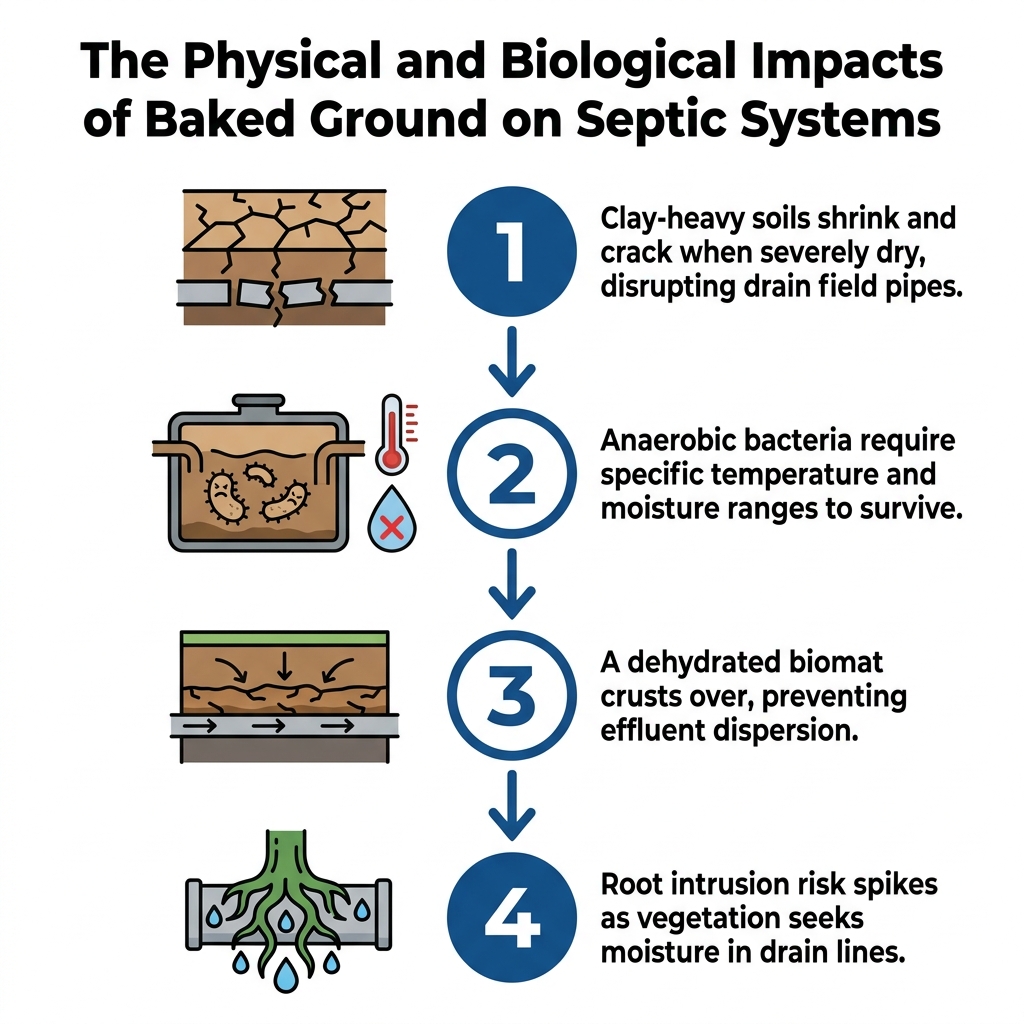

The threat of late summer dry spells extends beyond biology and absorption rates; it poses a direct physical threat to the structural integrity of the underground infrastructure. As clay soil dries, it does not just harden—it physically shrinks, creating vast underground voids and deep surface cracks.
This extreme soil movement actively removes the structural support surrounding delicate PVC drain field pipes and the main sewer line leading from the house to the tank. When the earth beneath a pipe shrinks away, the pipe is left suspended. The weight of the soil above, combined with the lack of support below, causes uneven settling.
Uneven settling is disastrous for a gravity-fed wastewater system. Drain field pipes rely on a precise, mathematically calculated downward slope to ensure effluent flows evenly through the perforations. When the ground shifts, these pipes can bow, sag, or snap entirely. In our field inspections, we frequently discover sagging pipes creating a "belly" where wastewater pools and stagnates, eventually causing a hard blockage.
Mechanical components attached to the system are equally vulnerable to this sudden shifting. For instance, if the ground around an aerobic treatment unit settles unevenly, it can strain the electrical connections, air lines, and motors. If you notice a septic aerator making strange noises during a severe drought, it is often a sign that the housing has shifted, causing internal components to grind or vibrate against their casings.
While the soil and bacteria struggle with the heat, local vegetation on Antioch IL residential properties goes into survival mode. During a severe drought, trees, large shrubs, and even deep-rooted grasses become desperate for water and nutrients. The most consistent source of moisture on a dry property is often the wastewater flowing through the drain field pipes.
The Problem of Thirsty Vegetation
The moisture and organic matter inside the drain field act as a powerful magnet for aggressive root systems. Trees can sense the moisture vapor escaping from the perforated pipes or from microscopic stress cracks in the main sewer line caused by soil shifting.
The Cause of Complete Blockages
Once roots locate the moisture source, they exploit any tiny opening they can find. A root no thicker than a human hair can slip into a pipe joint or a perforation. Once inside, it has access to a limitless supply of water and fertilizer. The root mass will rapidly expand, growing into a dense, sponge-like net that catches solid waste, paper products, and grease, eventually completely blocking the flow of effluent.
The Solution for Root Infiltration
Clearing invasive roots from a delicate, aging drain field requires specialized equipment. We strongly advise against using chemical root killers, as they often disrupt the delicate bacterial balance inside the tank, and aggressive mechanical snaking can easily shatter brittle PVC pipes that lack soil support. Our professional root removal uses targeted techniques to clear the lines without destroying the remaining infrastructure, restoring flow before the backup reaches the house.
Protecting your wastewater system during late summer dry spells requires a shift in daily habits. Because the baked ground has a drastically reduced capacity to absorb liquid, homeowners must focus on reducing the hydraulic load and protecting the physical space above the drain field. Relying on our deep local expertise in Antioch's specific soil composition ensures an accurate diagnosis of drought-related septic stress, rather than confusing it with standard wear and tear.
Here are the most effective strategies to manage your system when the ground turns to concrete:
• Stagger heavy water usage: Do not run the dishwasher, washing machine, and multiple showers on the same day. Spread laundry out over the week to avoid sending a massive surge of water into a drain field that has lost its absorption capacity.
• Protect the surface area: Keep all heavy machinery, parked vehicles, and even riding lawn mowers off the drain field. Dry soil offers zero structural buffer, meaning the weight transfers directly to the brittle pipes below, accelerating compaction and physical damage.
• Reroute surface drainage: Ensure that gutters, sump pump discharges, and yard drainage systems are directed far away from the drain field. While the ground is dry, you do not want sudden summer thunderstorms flooding a compromised area.
• Schedule routine maintenance: Consider scheduling a routine pump-out with us to relieve pressure on the biological ecosystem. Removing the accumulated sludge and scum layers gives the struggling bacteria a reset. If a system is severely compromised, professional septic tank repair and replacement services can address structural damage before it causes a total failure.
• Conserve indoor water: Install low-flow showerheads and repair running toilets immediately. A running toilet can send hundreds of gallons of excess water into the tank daily, easily overwhelming a drought-stressed biomat.
While the tank itself rarely dries out entirely due to daily household water use, the surrounding drain field soil can lose all moisture. This lack of external moisture creates the hardened crust that prevents effluent from leaving the tank properly. In Antioch IL residential properties, consistent indoor water usage usually keeps the primary tank liquid, but the critical absorption area outside the tank is what truly suffers from dehydration.
Elevated temperatures increase biological activity initially, but extreme heat combined with low moisture causes the essential anaerobic bacteria to die off rapidly. When the ambient temperature of the soil rises too high, the bacterial enzymes denature, halting the breakdown of solid waste. This leads to rapid sludge accumulation and a higher risk of untreated waste pushing into the drain lines.
A dry surface is normal and generally preferred, but if the soil matrix shrinks and deep cracks appear, it indicates severe dehydration that threatens the biomat's ability to filter wastewater beneath the surface. Surface cracking means the clay has compacted, which can physically shift the pipes below and channel untreated effluent deep into the groundwater rather than filtering it safely.
We recommend conserving indoor water use to reduce the volume of effluent entering the stressed drain field, and avoiding driving any equipment over the baked soil. Staggering your laundry days and fixing any leaky fixtures immediately are the most effective ways to lower the hydraulic load. Additionally, having the tank professionally pumped removes excess sludge, taking pressure off the struggling bacterial ecosystem.
Without adequate moisture to regulate their environment, the bacteria perish, halting the breakdown of solid waste and accelerating sludge accumulation. The biological ecosystem inside the tank operates within a specific thermal window. Once late summer heat waves push the internal temperature beyond that window, the colony collapses, requiring time and optimal conditions to naturally rebuild.
Understanding exactly how extreme heat and baked, dry soil impact your wastewater system is the very first step in preventing a catastrophic failure. From the physical shrinking of the clay soil matrix to the rapid die-off of essential anaerobic bacteria, late summer dry spells put immense pressure on an infrastructure that most people assume is immune to the weather. Adjusting your household water habits and protecting the physical space above your drain field can help preserve the delicate biomat and keep the bacterial ecosystem functioning.
However, once the ground has hardened and the pipes have shifted, conservation alone is rarely enough. If you suspect that severe drought conditions have already compromised your drain field or tank biology, a professional evaluation from Countryside Plumbing Sewer and Septic is the safest and most effective path forward to ensure the long-term functionality of your property's waste management system.
See why homeowners trust us for reliable, responsive service and lasting plumbing solutions.

Jordan and his team are very responsive and helpful with all questions and issues related to our septic system. I can reference them with the highest regards!
Jordan is a great guy who seems to genuinely care about delivering quality work. Not only did he fix the problem quickly and efficiently, but also pointed out that the ejector pump in my basement had installed the wrong kind and that there were some other parts used that are not up to code.
Had a great experience with Countryside. Called with a fairly urgent issue and Jordan was responsive and out the house fast. Spent hours diagnosing my problem. Prices were competitive and he took the time to explain the situation and options. Highly recommend.
I reached out to Countryside this past June when the pipe from my house to the septic tank broke. Jordan responded to my call quickly, gave me a very reasonable quote, and immediately fit me into his schedule- which I was extremely thankful for because my yard was getting pretty smelly. Jordan is an expert in his field.
Jordan and his crew at Countryside just installed and hooked up a new septic tank for us. We could not be happier with the result! They are professional, easy to talk to, and kind. We highly recommend them,
Jordan and his team are very responsive and helpful with all questions and issues related to our septic system. I can reference them with the highest regards!
Jordan is a great guy who seems to genuinely care about delivering quality work. Not only did he fix the problem quickly and efficiently, but also pointed out that the ejector pump in my basement had installed the wrong kind and that there were some other parts used that are not up to code.
Had a great experience with Countryside. Called with a fairly urgent issue and Jordan was responsive and out the house fast. Spent hours diagnosing my problem. Prices were competitive and he took the time to explain the situation and options. Highly recommend.
I reached out to Countryside this past June when the pipe from my house to the septic tank broke. Jordan responded to my call quickly, gave me a very reasonable quote, and immediately fit me into his schedule- which I was extremely thankful for because my yard was getting pretty smelly. Jordan is an expert in his field.
Jordan and his crew at Countryside just installed and hooked up a new septic tank for us. We could not be happier with the result! They are professional, easy to talk to, and kind. We highly recommend them,
Jordan and his team are very responsive and helpful with all questions and issues related to our septic system. I can reference them with the highest regards!